How to choose a moisturizer for your skin type: match the amount of oil to how your skin behaves. The American Academy of Dermatology points oily skin to a gel or nothing, and dry skin to a cream or ointment. If skin feels tight again within a few hours, go one texture richer; if it stays slick, go lighter.
You put on moisturizer after your shower, and by the time you sit down at your desk your cheeks feel tight again. Or the opposite: an hour later your forehead still has a film you can feel with a fingertip. Both are your skin giving feedback on the product. How to choose a moisturizer for your skin type comes down to one thing the jar rarely states plainly: how much oil it carries, and whether that amount matches how much your skin needs.
How do you choose a moisturizer for your skin type?
Pick the texture by how much oil your skin needs, then adjust by how it feels a few hours later. Moisturizers come in a rough ladder from light to heavy: gel, lotion, cream, ointment. The American Academy of Dermatology (AAD) describes a gel as often water-based and lighter on skin than a lotion, a cream as thicker, with more oil and more hydrating, and an ointment as the thickest of all. It adds that the right choice depends on your skin type and how dry your skin is.
So start with the rung that fits your skin on an ordinary day:
- Oily, or shiny by midday: a gel, or no moisturizer if your skin never feels tight.
- Normal: a lotion. Dermatologists on the AAD page say lotion is enough for most younger people with seasonal dryness, and that perimenopausal people and everyone 50 and older should use a cream-based moisturizer.
- Combination: a light texture all over, with something richer only where skin feels tight (more on that below).
- Dry, or tight after every wash: a cream, and an ointment or balm for the worst patches.
Then let the next few hours decide whether you were right. The rest of this guide is about reading that signal.
What is the difference between gel, lotion and cream moisturizers?
Mostly how much oil they carry, which you feel as thickness and greasiness. The NHS, which calls these products emollients, describes lotions as thin and easy to spread but not very moisturizing, creams as not very greasy and quick to absorb, and ointments as greasy, thick and very moisturizing. The trade-off is the one you feel on your face: the more moisturizing the texture, the greasier it tends to feel.
There is no single right answer: the NHS says you “may have to try a few different emollients to find the best one”. The right one is the one heavy enough to keep your skin comfortable and light enough that you actually use it. A cream you leave in the drawer because it feels slick does less than a lotion you put on twice a day.
On ingredient lists, the ladder shows up as two kinds of work. Water-binding ingredients, called humectants, such as glycerin, draw water into the top layer of skin. Sealing ingredients, called occlusives, such as petrolatum, slow the water from evaporating.
What moisturizer is best for oily skin?
Usually a gel, and sometimes nothing. On the AAD’s page, a dermatologist recommends that people with oily skin consider “skipping the moisturizer or opt for a gel, which is lighter than other types of moisturizer.”
The catch is that oily and well hydrated are not the same thing. Skin can shine on the forehead and still feel tight on the cheeks after washing, because oil and water are separate problems. If that sounds like you, our guide to whether dehydrated skin can be oily explains why. In that case a light gel with a humectant is worth keeping, even if you skip anything richer.
What moisturizer is best for dry skin?
A cream, or an ointment for very dry patches, ideally one that both adds water and holds it in. The AAD’s advice for dry skin is to skip lotions and go straight to a cream or ointment.
Why both kinds of ingredient? A 2016 dermatology review explains that “Humectants are a double-edged weapon as they increase TEWL by enhancing water absorption from the dermis into the epidermis where it is easily lost to the environment.” TEWL is transepidermal water loss, the water escaping through your skin. The review adds that this is why humectants are mostly combined with an occlusive.
One study tested that pairing directly. In a randomized, double-blind crossover trial, 51 healthy volunteers with dry skin had 4 versions of an emollient applied to their forearms: the full cream, its base alone, the base with only glycerol (another name for glycerin), and the base with only petrolatum. Over 12 hours, the full cream reduced water loss more than the base and the glycerol-only version, and raised skin moisture readings more than the base and the petrolatum-only version. The authors credited petrolatum mainly with the barrier effect and glycerol with the hydration. One of the authors worked for Pierre Fabre Dermatologie, and the trial tested forearms, not faces, but it shows why a dry-skin cream lists both.
For how the two ingredient types split the work in cold weather, see humectant vs occlusive skincare for winter. If even a rich cream is not enough overnight, slugging for dry, tight skin covers the thin-layer-of-petroleum-jelly approach.
How do you moisturize combination skin?
Use the lighter texture all over and add a richer one only where skin feels tight. A dermatologist on the AAD page tells patients with combination skin to moisturize the dry spots and skip the oily areas. The NHS also suggests combining emollients, such as a cream during the day and an ointment at night, and the same logic works across one face. A gel or lotion everywhere, then a small amount of cream on the cheeks or around the nose, is easier than hunting for a single jar that suits both zones.
How do you know if a moisturizer is too heavy or too light?
Watch your skin for the first few hours after you put it on. The 2016 review reports that “The moisturizing action of emollients is evident maximum 30 min–1 h after their use and usually lasts for 4 h.” It also says moisturizer may need to go on 1 to 3 times a day.
Read that against your own day:
- Too light: your skin feels tight or looks flaky again well before that 4-hour mark, or makeup catches on dry patches by late morning. Move one rung up the ladder, from gel to lotion or lotion to cream, or add a second, thinner layer at lunch.
- Too heavy for your taste: an hour after applying, the surface still feels slick or looks shiny, and makeup slides. That is not proof the product is harming your skin, but it does mean you are wearing more oil than you need. Try a thinner layer first, then a lighter texture.
One more check before you blame the texture: apply moisturizer to skin that is still slightly damp from washing or a mist. The same review notes that occlusives work best on dampened skin, and our dry skin routine walks through that timing.
Should your moisturizer change with the season?
Often, yes. Skin that is happy with a lotion in a humid summer can need a cream once the heating comes on. Our guide on whether your skincare routine needs to change with the climate covers the bigger picture. The practical version is simple: when the tight-by-lunchtime signal starts showing up, move one rung richer, and step back down when the weather turns.
Editor’s note
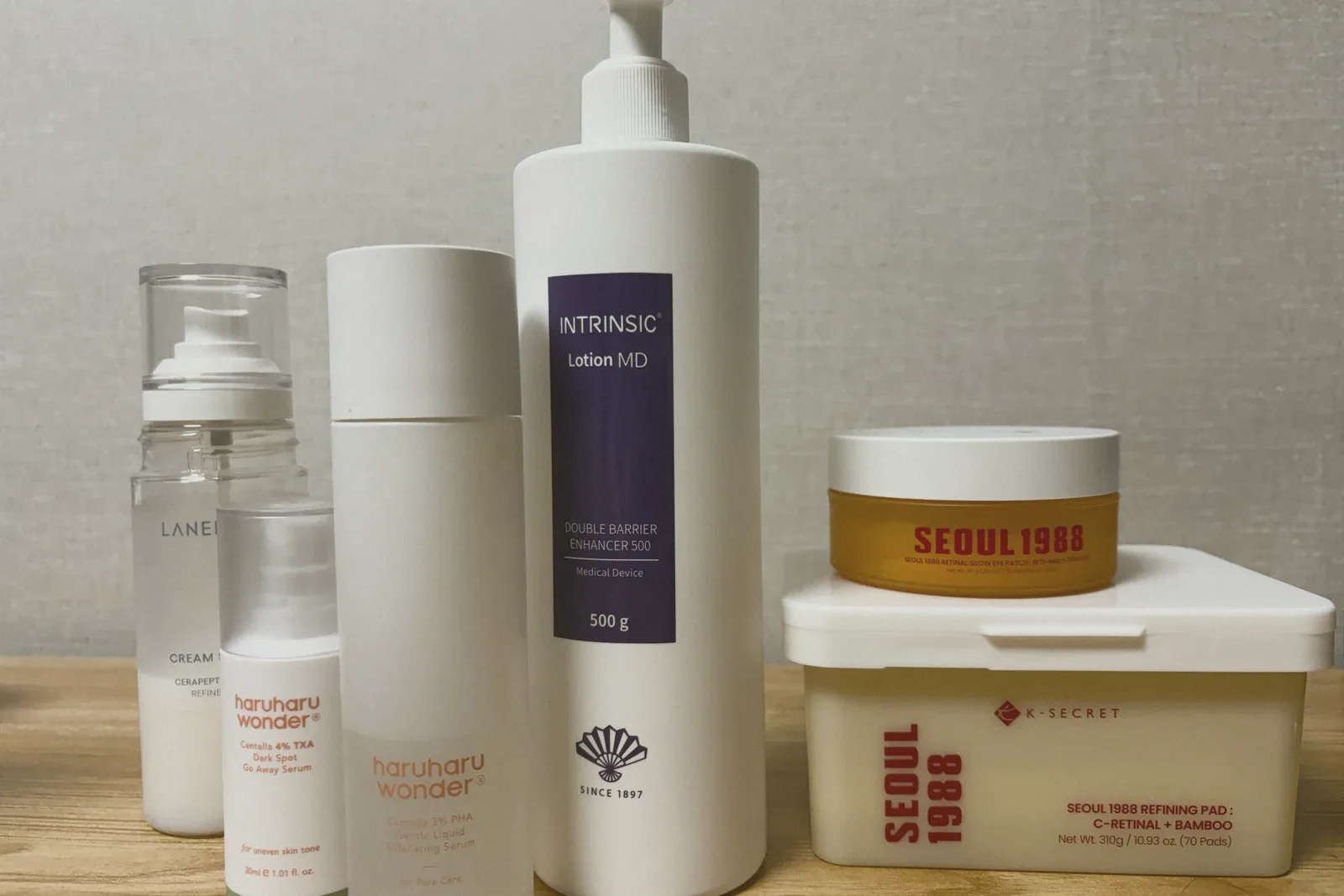
My moisturizer has changed more with where I lived than with any label. In the UK, cold outside and dry indoors, moisture came first, and I built it up in layers instead of relying on one product. In Bali and Kuala Lumpur, tropical heat and traffic fumes changed my priorities: I cleansed more thoroughly and added water with a sheet mask in the evenings. Today, morning and evening, I mist a cream toner on first and later apply the lotion I got from my dermatologist, Intrinsic Lotion MD. It goes on comfortably even on days my skin is irritated or sunburned.
This article is for general cosmetic information and is not medical advice. If your skin stays dry, cracked or itchy despite moisturizing, see a dermatologist.
Evidence: The texture advice comes from American Academy of Dermatology and NHS guidance rather than trials; the closest study is a 12-hour forearm test of one emollient in 51 volunteers, with a co-author from the drug company Pierre Fabre.
- haruharu wonder: Centella 5% Niacinamide Radiance Gel Cream
- Intrinsic: Lotion MD
- Bepanthol: SensiDaily
Is a gel moisturizer enough for dry skin?
Usually not on its own. The American Academy of Dermatology describes a gel as often water-based and lighter than a lotion, and steers dry skin toward a cream or ointment instead. If you like the feel of a gel, keep it as a first layer and put a cream over it.
Can oily skin skip moisturizer?
Some can. A dermatologist quoted by the American Academy of Dermatology suggests that people with oily skin consider skipping it or use a gel. If your skin shines but still feels tight after washing, keep a light gel rather than skipping moisturizer: shine is about oil, tightness is about water, and you can have both.
Should I use a different moisturizer at night?
You can. The NHS suggests that you may decide to use a cream during the day and an ointment at night. It describes creams as not very greasy and quick to absorb, and ointments as greasy, thick and very moisturizing, which matters less while you sleep.
How often should you apply moisturizer?
Once to 3 times a day, depending on how quickly your skin feels dry again. A 2016 dermatology review says the effect of an emollient peaks 30 minutes to 1 hour after you apply it and usually lasts about 4 hours, so very dry skin may need a second layer during the day.
- American Academy of Dermatology. How to pick the right moisturizer for your skin.
- NHS. Emollients.
- Vaillant L, Georgescou G, Rivollier C, Delarue A. Combined effects of glycerol and petrolatum in an emollient cream: a randomized, double-blind, crossover study in healthy volunteers with dry skin. J Cosmet Dermatol. 2020;19(6):1399-1403.
- Sethi A, Kaur T, Malhotra SK, Gambhir ML. Moisturizers: the slippery road. Indian J Dermatol. 2016;61(3):279-287.
Editorial content, not medical advice.