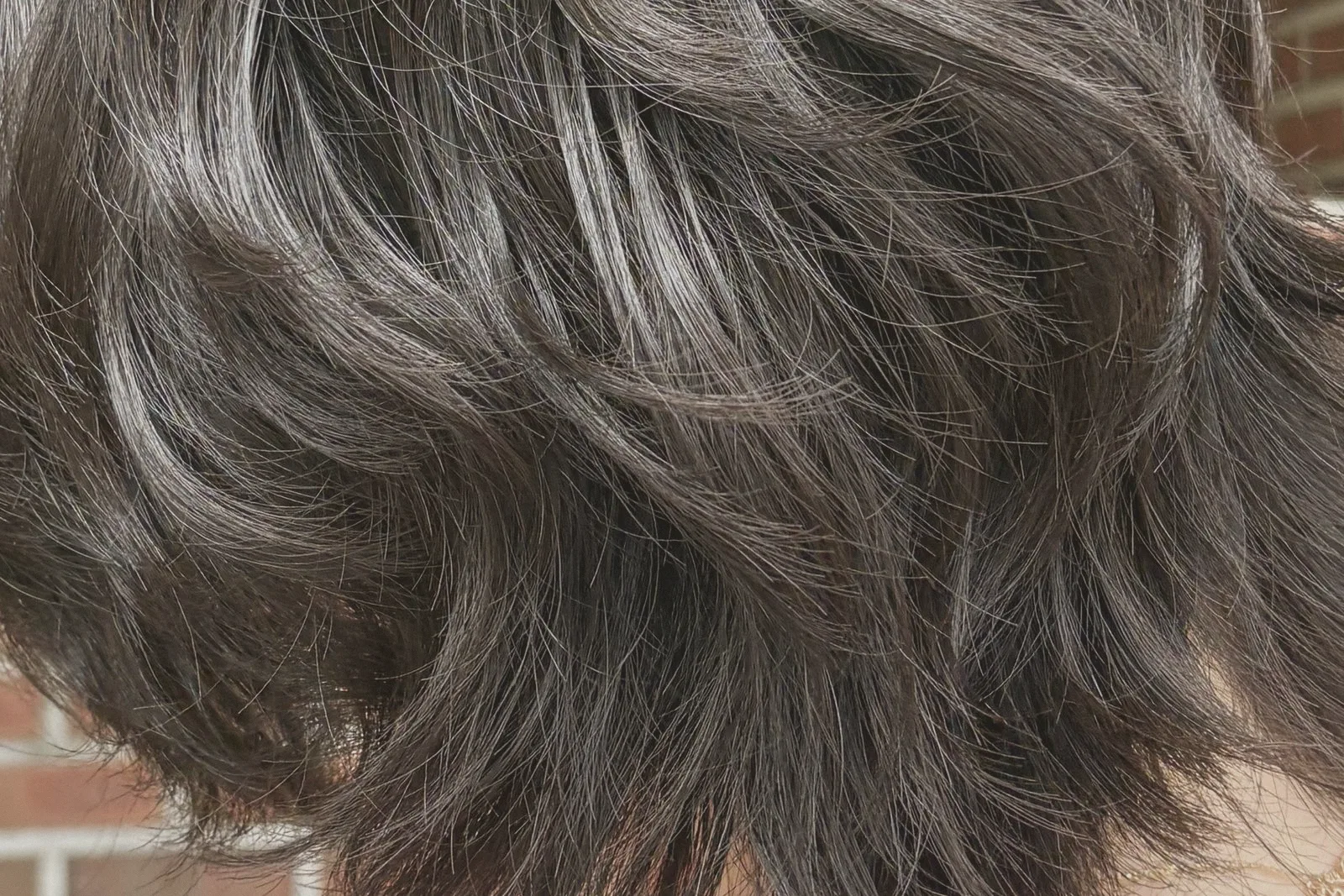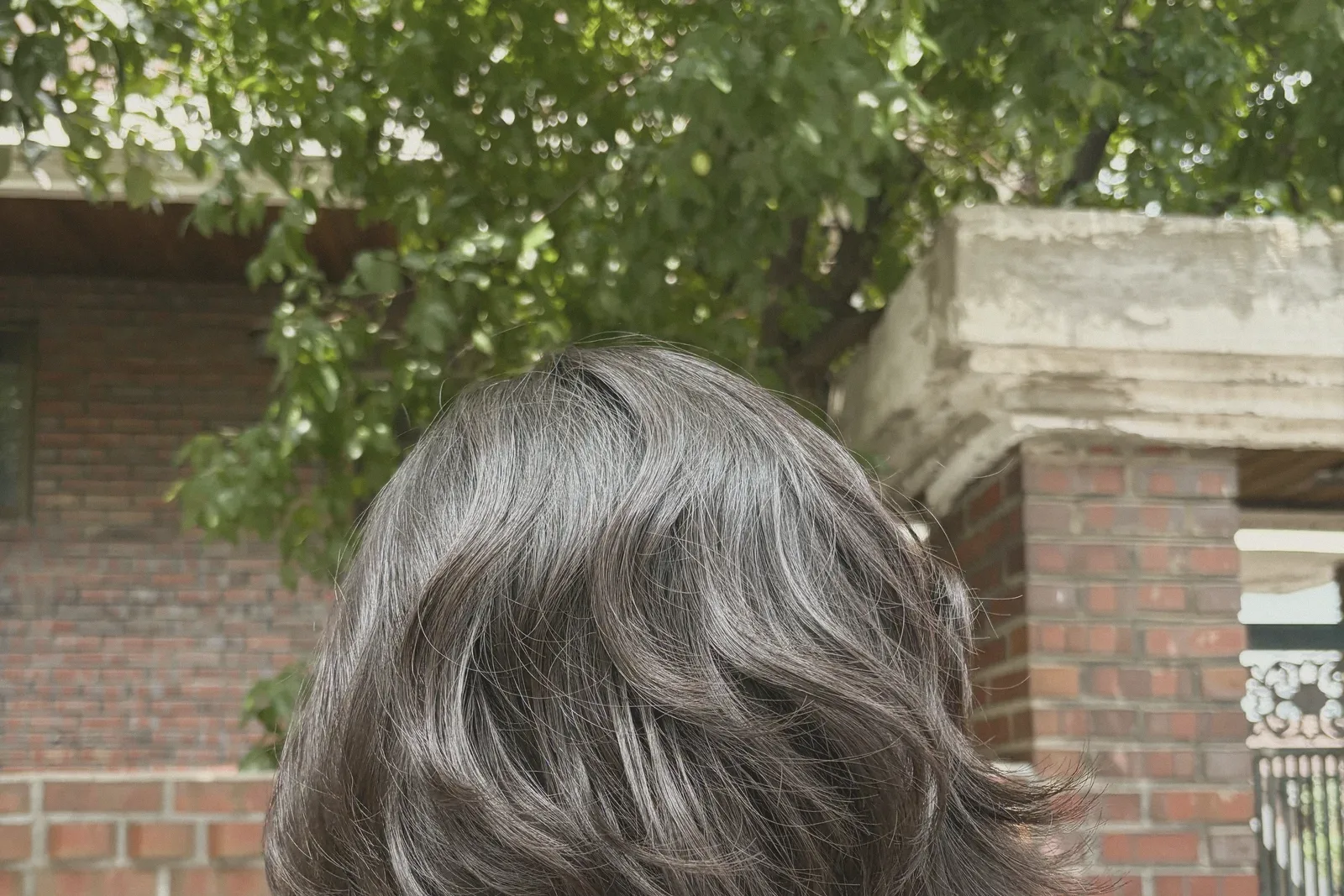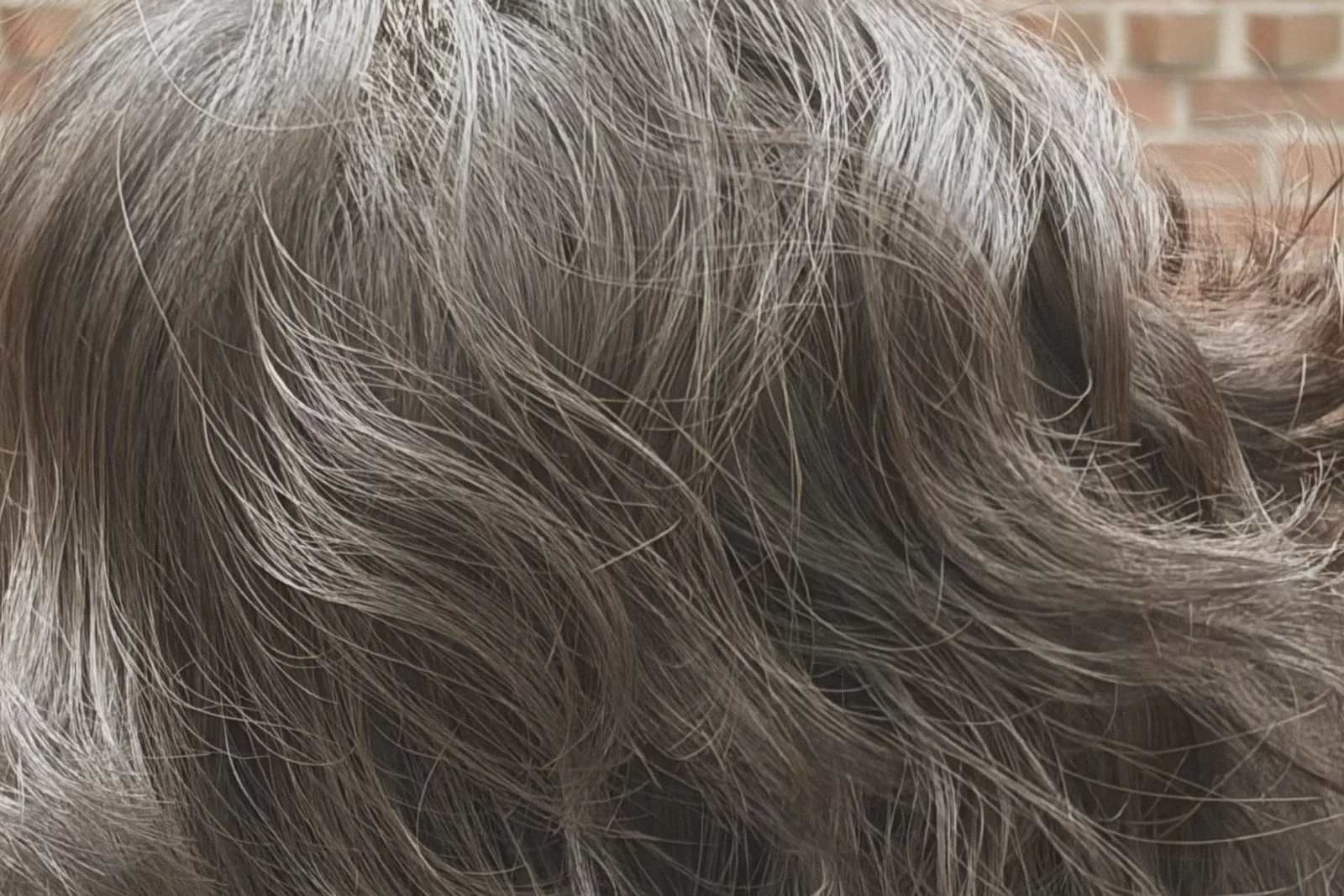
Scalp scrub benefits are mostly about feel: a scrub lifts flakes that are already loose, and the scalp feels cleaner for a while. The closest direct study is small, uncontrolled and company-linked. Dandruff, which affects about half of adults, involves yeast, oil and a weaker scalp barrier, so a scrub alone is unlikely to settle it.
You part your hair under the bathroom light and see it: a dusting of white along the part line, a few flakes caught at the roots, maybe a waxy film where dry shampoo has been sitting for days. A jar of scalp scrub promises to clear all of it in one wash. The honest version of scalp scrub benefits is narrower than the label suggests, and it depends on what is making the flakes in the first place.
What are the benefits of a scalp scrub?
The main benefit is immediate and short-lived: a scrub lifts flakes that are already loose, so your scalp looks and feels cleaner after that wash. Brands market scalp scrubs for flakes and product buildup, and that surface clean-up is the part you can see.
What a scrub cannot reach is the reason those flakes form. The research that explains a flaky scalp is research on dandruff itself, and it points below the surface, to oil, yeast and a weaker barrier.
The closest thing to a direct test is small. A 15-day study in India gave 32 adults with mild to moderate dandruff an acid scrub twice a week plus a daily copper peptide serum; 29 finished, and a score for flakes stuck to the scalp fell by 61.24%. There was no comparison group, the scrub and serum were used together, and one author worked for the company that makes both. The authors themselves wrote that “a larger sample size would provide more robust data and improve the reliability of the findings.”
That leaves a useful but modest role. If your scalp is healthy and you simply want it to feel cleaner between heavier styling days, a scrub can give you that feeling for an evening. If the flakes are coming back every few days, the question is less about scrubbing and more about what is producing them.
Can a scalp scrub help with dandruff?
It can lift the visible flakes, but it does not touch the causes, so the flakes tend to return. Dandruff is extremely common: a University of Miami review estimates it “affects approximately 50% of the general adult population worldwide,” starting around puberty and peaking around age 20. The same review describes it plainly: “Dandruff is restricted to the scalp, and involves itchy, flaking skin without visible inflammation.”
The review links dandruff to three overlapping factors: the oil the scalp produces, yeast that lives on the skin’s surface, and how sensitive a given person is to that yeast. A scrub removes the end product, the flakes, but none of those three. That is why someone with dandruff can scrub on Sunday and see flakes again by Wednesday.
Flake texture is not a reliable guide either. A US family-medicine review notes that in seborrheic dermatitis, “The scales are greasy, not dry, as commonly thought.” The Miami review says flaking in both conditions “may be oily or dry.” If you are not sure which you have, our guide to telling a dry scalp from dandruff walks through the signs.
Is it bad to scrub your scalp?
Gentle scrubbing on a healthy scalp is unlikely to be a problem, but a flaky scalp is often already a stressed one. In a 2025 study by L’Oréal researchers, dandruff scalps lost more water through the skin and held less of it than healthy scalps, and had more redness, dryness and itch. Their surface fats were also different, with a ceramide mix the authors describe as “supporting a weakened scalp barrier.”
A 2013 review from Procter & Gamble scientists and academic dermatologists reached a similar picture: “Biomarkers representing inflammation, hyper-proliferation and barrier function are all perturbed by the D/SD condition.” D/SD is their shorthand for dandruff and seborrheic dermatitis.
Neither study tested scrubs. Our reading is that if the barrier on a flaky scalp is already weaker, rubbing it hard with granules adds friction where the skin has the least to spare. It is the same logic we apply to the face in how to exfoliate without damaging your skin barrier: the more irritated the skin, the gentler the method.
What is the difference between a physical and a chemical scalp scrub?
A physical scrub uses granules, such as sugar, salt or ground seeds, and works by friction. A chemical one uses acids that loosen the bonds holding dead cells together, so flakes come away with less rubbing. Many scalp scrubs combine both.
The acid route is better described in the literature. A UK shampoo trial explains the role of one common exfoliating acid this way: “Salicylic acid has keratolytic properties and aids in the removal of scales.” Keratolytic means it softens and loosens the outer layer of dead cells.
Whichever type you pick, if your scalp stings easily, friction is the part you can control most directly: less pressure, fewer passes, fingertips rather than nails.
How do you use a scalp scrub?
Follow the directions on the pack, and treat the first use as a test. Wet or dry application, how long to leave it on and how often to use it all vary by formula, so the product’s own instructions are the starting point, not a schedule borrowed from another brand.
A few habits keep it gentle. Section your hair so the scrub reaches skin rather than lengths. Work in small circles with the pads of your fingers, not your nails, and stop at firm pressure rather than pushing harder where it itches. Rinse until the water runs clear, since granules caught at the roots can feel like more flakes. Then shampoo as usual.
If your scalp feels hot, tight or sore the next day, leave a longer gap or stop. Our guide to how often you should wash your hair covers the washing side, which often matters more for an oily or flaky scalp than any extra step. If the itch gets worse in cold months, why your scalp gets so itchy in winter explains how dry indoor air plays into it.
Editor’s note
I wash my hair every evening and shampoo twice. I soak my hair and scalp well in warm water first; the first wash is STEAMBASE Tea Tree Scalp Water Scaler, a pre-wash made for oily scalps, and then a second shampoo. I rinse several times until no foam is left, towel-dry straight away and finish under a fan.
On my body, I love ttaemiri, the Korean body scrub that goes with a trip to the bathhouse or sauna. The scalp research describes a different job. At the bathhouse, the scrub works on body skin that is otherwise fine. On a flaky scalp, the flakes are often a sign of something still going on underneath, and the evidence behind body scrubbing, which we cover in how to exfoliate body skin without irritation, does not carry over.
Who should skip a scalp scrub?
Skip it if your scalp is red, sore, scratched open or covered in thick, stuck-on scale, and see a dermatologist instead. The Miami review notes that seborrheic dermatitis, unlike plain dandruff, involves visible inflammation and can show up beyond the scalp: behind the ears, in the folds beside the nose, on the eyebrows and on the upper chest. Flaking in those places is a sign that a scrub is the wrong tool.
For a healthy scalp that just feels heavy after a week of dry shampoo, a scrub is a reasonable occasional step. For a scalp that flakes again and again, the better plan is to work out the cause first.
This article is for general cosmetic information and is not medical advice. If you have a skin condition, speak with a dermatologist.
Evidence: The evidence is thin: what we know comes from dermatology reviews of dandruff, barrier measurements in company-run studies, and one small, uncontrolled, manufacturer-linked trial of an acid scrub.
Does a scalp scrub help with dandruff?
It can lift visible flakes for a while, but it does not address what drives dandruff: yeast on the scalp, scalp oil and individual sensitivity. Dandruff scalps also show a weaker barrier in measurements, which is a reason to be gentle rather than scrub harder.
Is a physical or a chemical scalp scrub better?
They work differently. Granule scrubs work by friction; acid scrubs loosen the bonds that hold flakes in place, so they come away with less rubbing. If your scalp is sensitive or already sore, friction is the part to be most careful with.
When should you not use a scalp scrub?
Skip it on a scalp that is red, sore, scratched open or scaling in thick patches, or if flaking also shows up on the eyebrows, beside the nose or behind the ears. Those signs point to a condition a dermatologist should look at.
- Borda LJ, Wikramanayake TC. Seborrheic dermatitis and dandruff: a comprehensive review. J Clin Investig Dermatol. 2015;3(2).
- Bitton A, et al. A clinical evaluation of scalp barrier function, ceramide levels, and microbiome in diverse dandruff patients. J Drugs Dermatol. 2025;24(3 Suppl 1):s3-14.
- Schwartz JR, et al. A comprehensive pathophysiology of dandruff and seborrheic dermatitis: towards a more precise definition of scalp health. Acta Derm Venereol. 2013;93(2):131-7.
- Schwartz RA, Janusz CA, Janniger CK. Seborrheic dermatitis: an overview. Am Fam Physician. 2006;74(1):125-30.
- Squire RA, Goode K. Randomised, single-blind, single-centre comparison of two dandruff shampoos. J Dermatolog Treat. 2002;13(2):51-60.
- Patel MN, et al. An assessment of the safety, efficacy, and tolerability of a novel scalp treatment regimen combining a hydroxy acid-based scrub and copper tripeptide serum in the management of seborrheic dermatitis in adults. Cureus. 2024;16(9):e70108.
Editorial content, not medical advice.