Why I avoided retinoids for years had little to do with retinoids. Retinal felt too irritating for every day, it was night only, and it demanded sunscreen the next morning. Almost every sunscreen made my eyes sting until my head ached. When retinal finally came in a format I could sleep in, it stuck.
I have had a line of small bumps under my lower lip since high school. They hide most of the time and rise when I roll my lips inward or press my tongue against the inside of my chin. For years, the ingredient that eventually changed them was right there, and I did not use it. It was not that I doubted retinal. It was everything that came attached to it.
What put me off
Retinal felt too irritating to use every day. It was for night only. It meant sunscreen the next morning, without exception. And it came with a calendar: which nights I had used it, which nights I had not. I already had a rhythm of my own, oil and balm deep cleansing twice a week and a pharmacy AHA/BHA once a week. Keeping track of retinal nights on top of that felt like a chore.
Irritation from vitamin A is real, but it depends a lot on the form. In a 44-week study of 355 people, the prescription form caused redness in 44% of them in the first 4 weeks, while retinal, the form I eventually used, caused redness, scaling and burning significantly less often.
The sunscreen problem
The biggest reason, though, was sunscreen.
Most sunscreens made my eyes sting. Not a little. They stung badly enough that I had a headache for the rest of the day. I went through dozens of them and threw them away, one after another.
So I disliked sunscreen as a whole category. And retinal, as I understood it, was a promise to wear sunscreen every single morning. That was the deal I kept refusing.
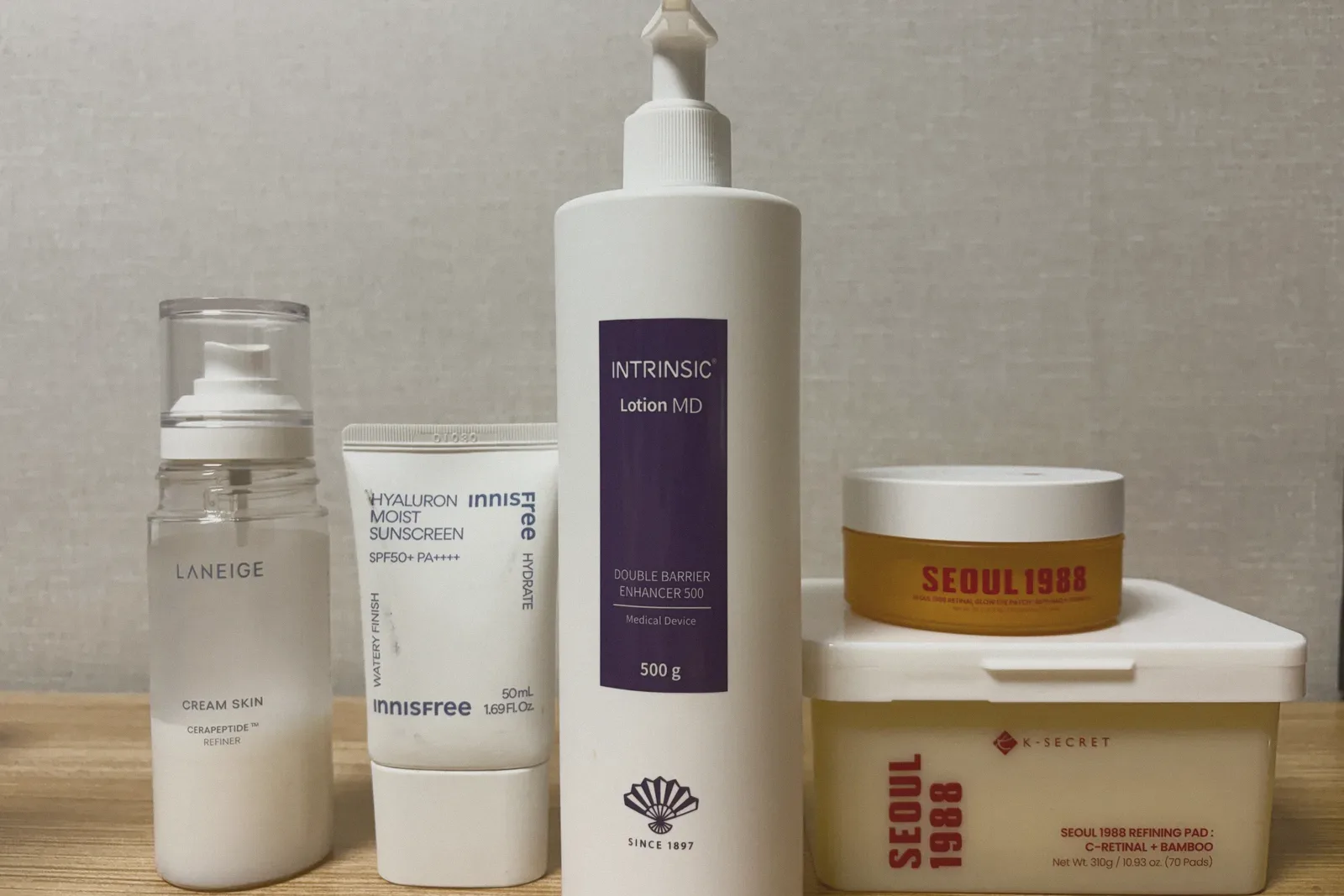
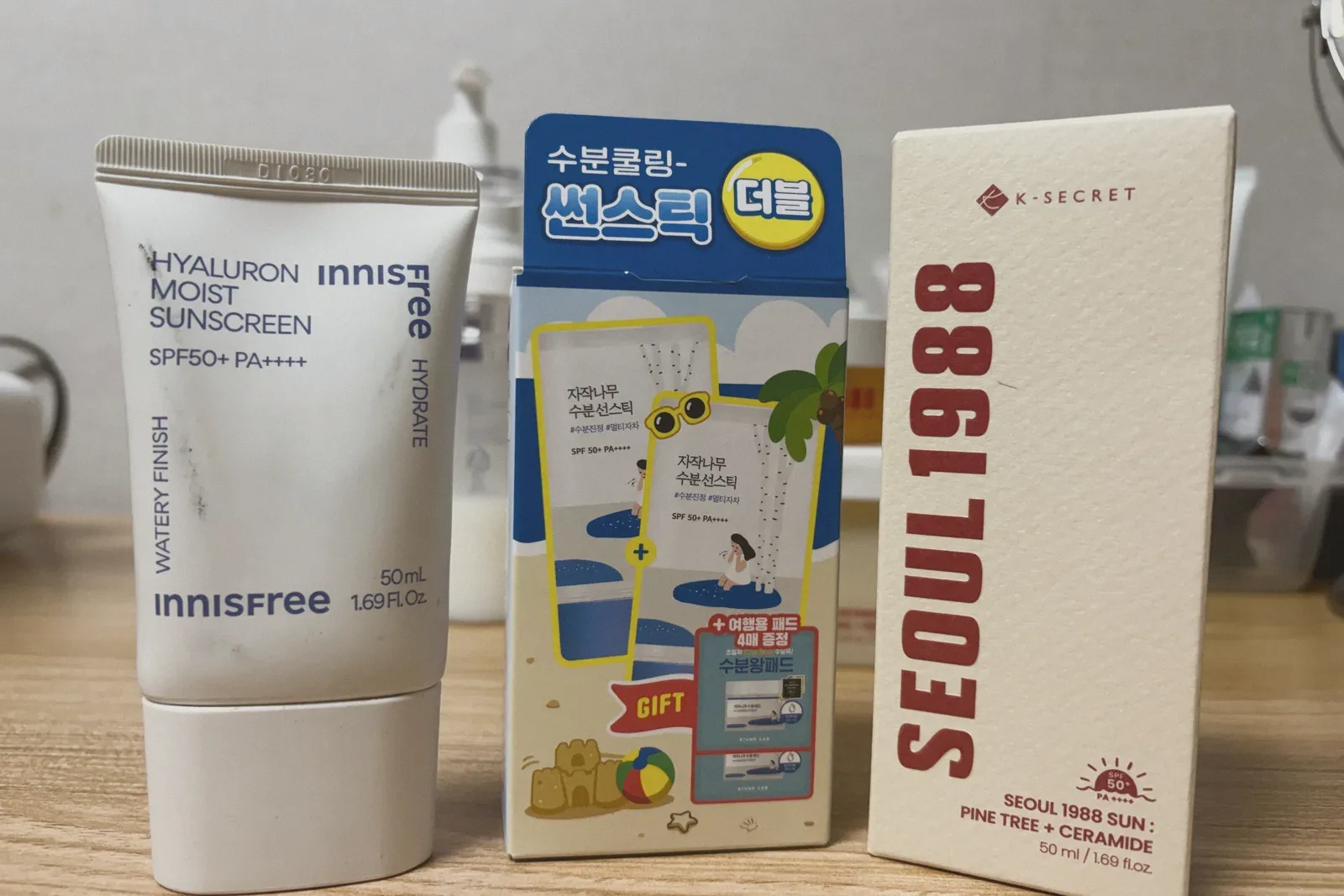
Out of all those dozens, I found exactly two that never made my eyes sting: innisfree’s Hyaluron Moist Sunscreen and ROUND LAB’s Birch Juice Moisturizing Sun Stick. The innisfree one is what I put on every morning now.
What was happening under my eyes
My eyes were their own story. Freckles and spots under my eyes come out in summer and fade in winter. Once, I layered several melanin-care products on top of each other, and my skin answered with dry patches and a rough surface.
What finally changed
What changed was the format.
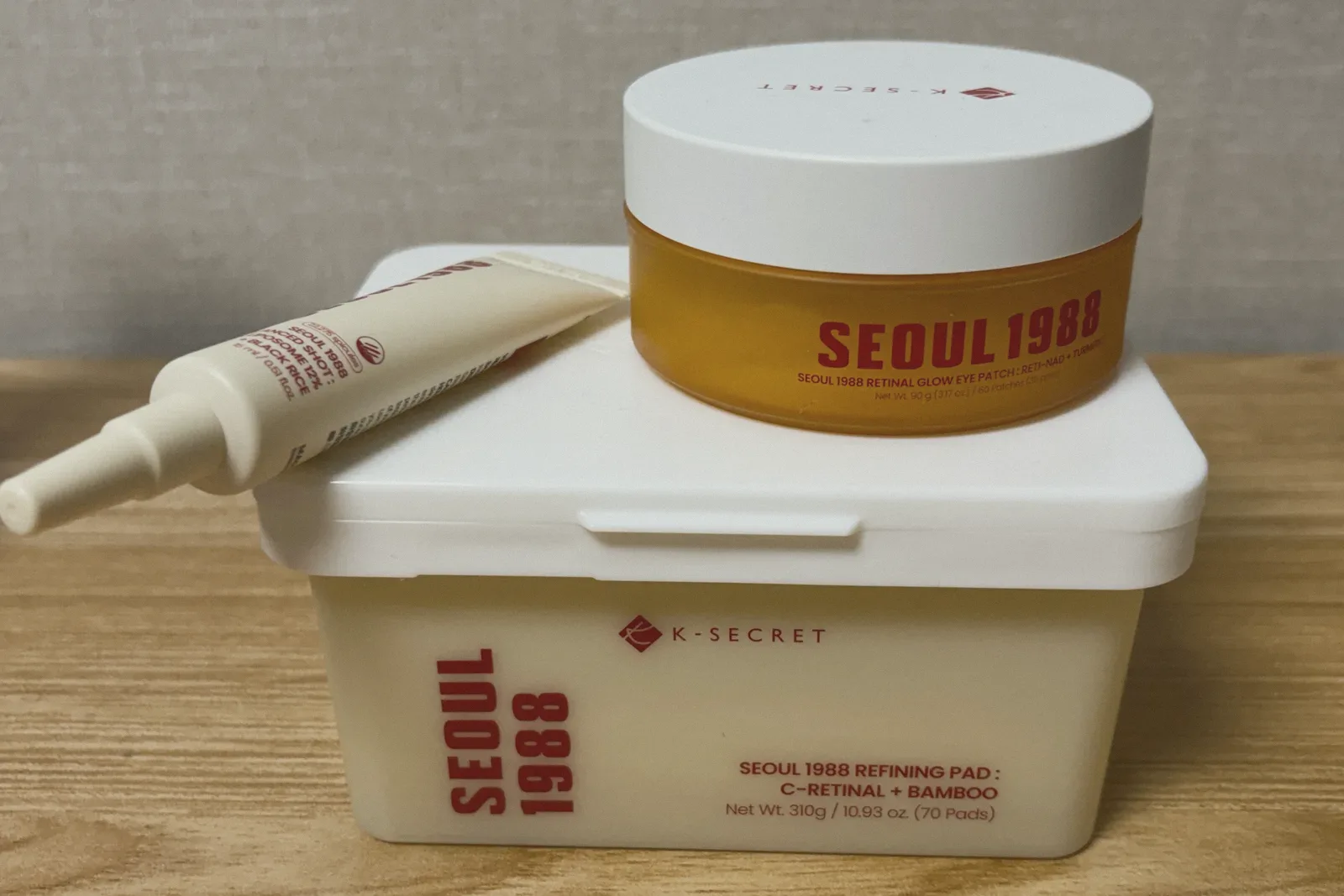
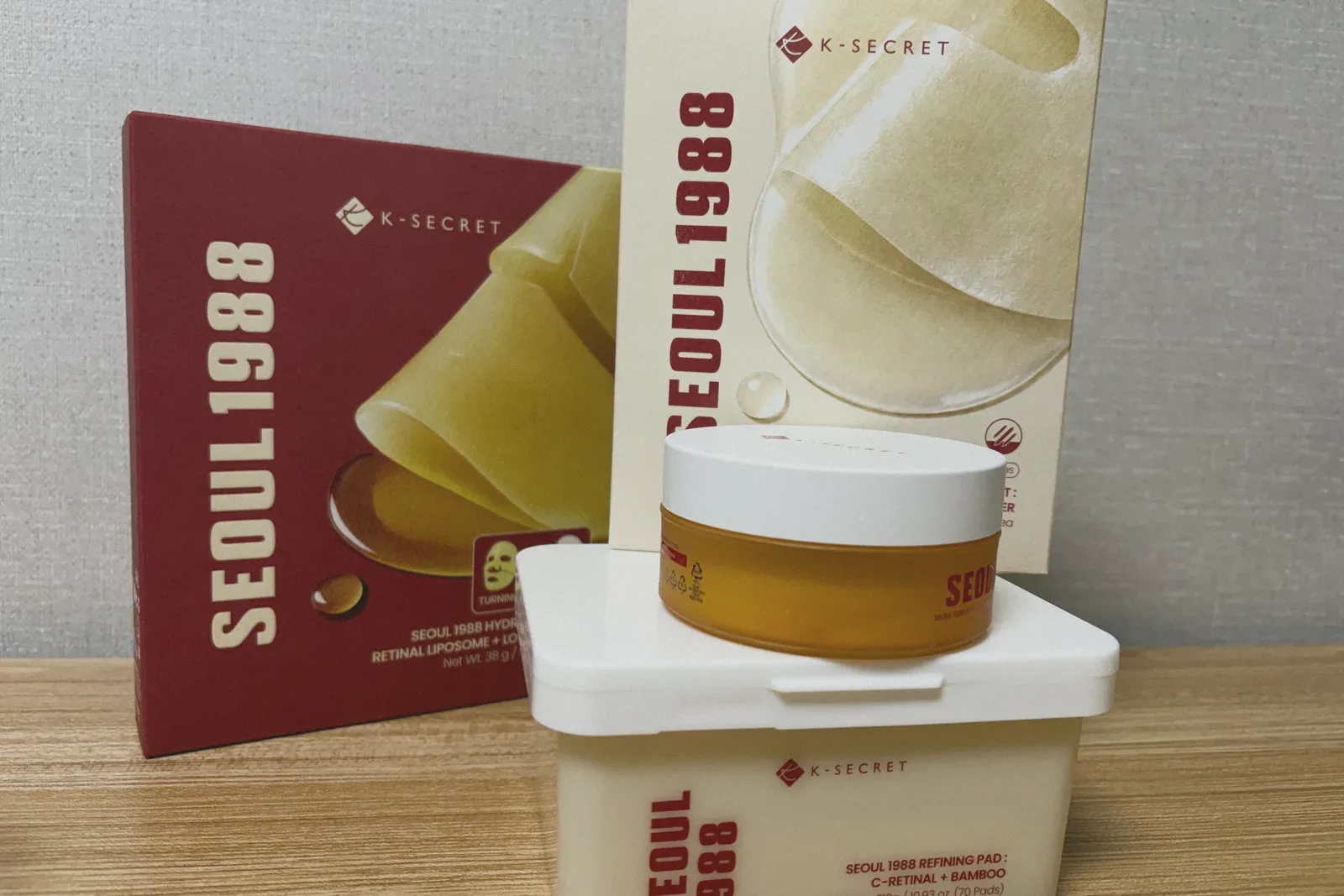
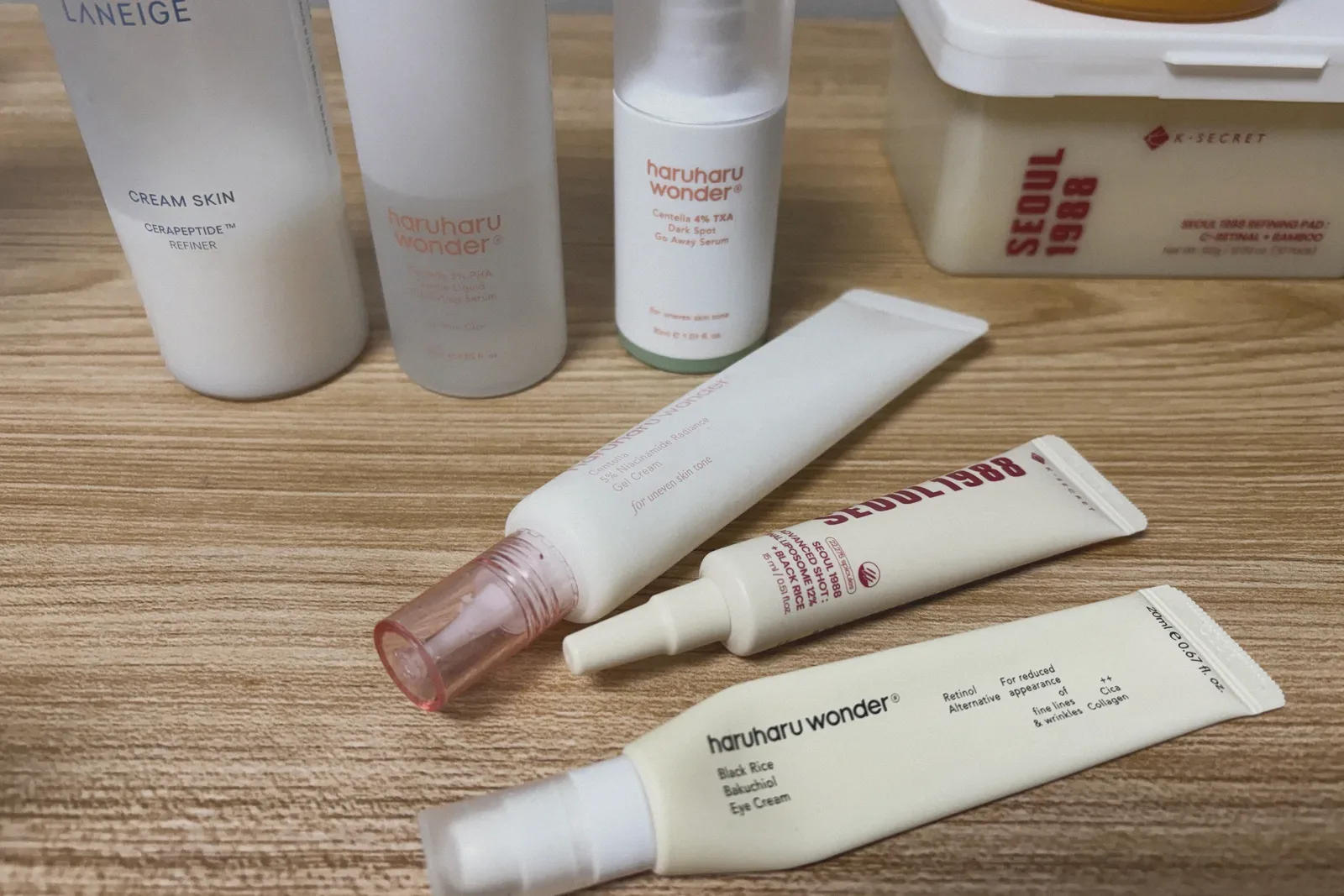
I started using K-SECRET’s SEOUL 1988 retinal eye patches and pads simply because they were easy. Disclosure: editor-affiliated brand. The patches go under my eyes before bed and come off in the morning. They stay in place even when I toss and turn, and they feel less stuffy than a full sheet mask. I tear one pad in half and lay the pieces on my forehead and under my chin.
After about two months, I felt the bumps under my chin getting shallower. The spots under my eyes seemed lighter too, though they fade every winter anyway, so I hold that one loosely. My first thought was simple: so it was the retinal.
Looking back
The ingredient was never what I was avoiding. It was a routine that asked for a schedule I did not want to keep and a sunscreen my eyes could not stand. Retinal in a form I could put on at bedtime and forget about is what finally fit.
I tell the full story of the bumps in The bump only I could see, and the cleansing years in What deep cleansing couldn’t fix.
If you want the evidence side, on how retinal and retinol differ and which one to start with, it is in our companion piece, Retinal vs retinol for fine lines and bumpy texture.
Related: How much sunscreen should I use on my face?, Two months of sleeping in patches
Evidence: Personal experience over years of not using retinal, then about two months of using it. No measurements, no before photos.
- K-SECRET: SEOUL 1988 Retinal Glow Eye Patch: Reti-NAD + TurmericDisclosure: editor-affiliated brand.
- K-SECRET: SEOUL 1988 Refining Pad: C-Retinal + BambooDisclosure: editor-affiliated brand.
- innisfree: Hyaluron Moist Sunscreen SPF50+ PA++++
- ROUND LAB: Birch Juice Moisturizing Sun Stick SPF 50+
Why did you avoid retinoids?
Retinal seemed too irritating to use every day, it had to be used at night, it meant sunscreen the next morning, and keeping track of which nights I used it felt like a chore. The biggest reason was sunscreen: most of them made my eyes sting badly enough to give me a headache all day.
What made retinal work for you in the end?
The format. I started sleeping in retinal eye patches and a retinal pad because they were easy. After about two months I felt the bumps under my chin getting shallower.
Editorial content, not medical advice.