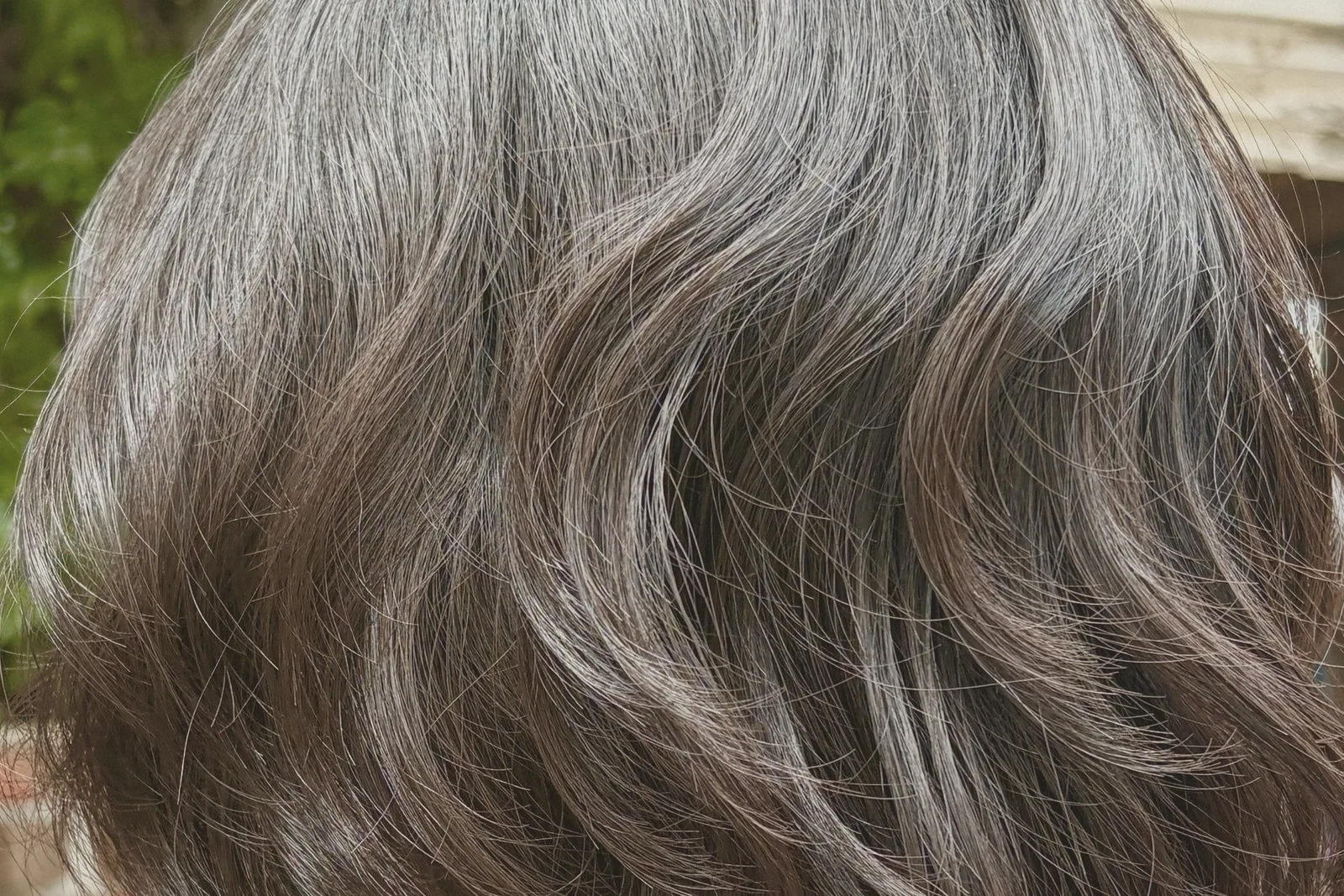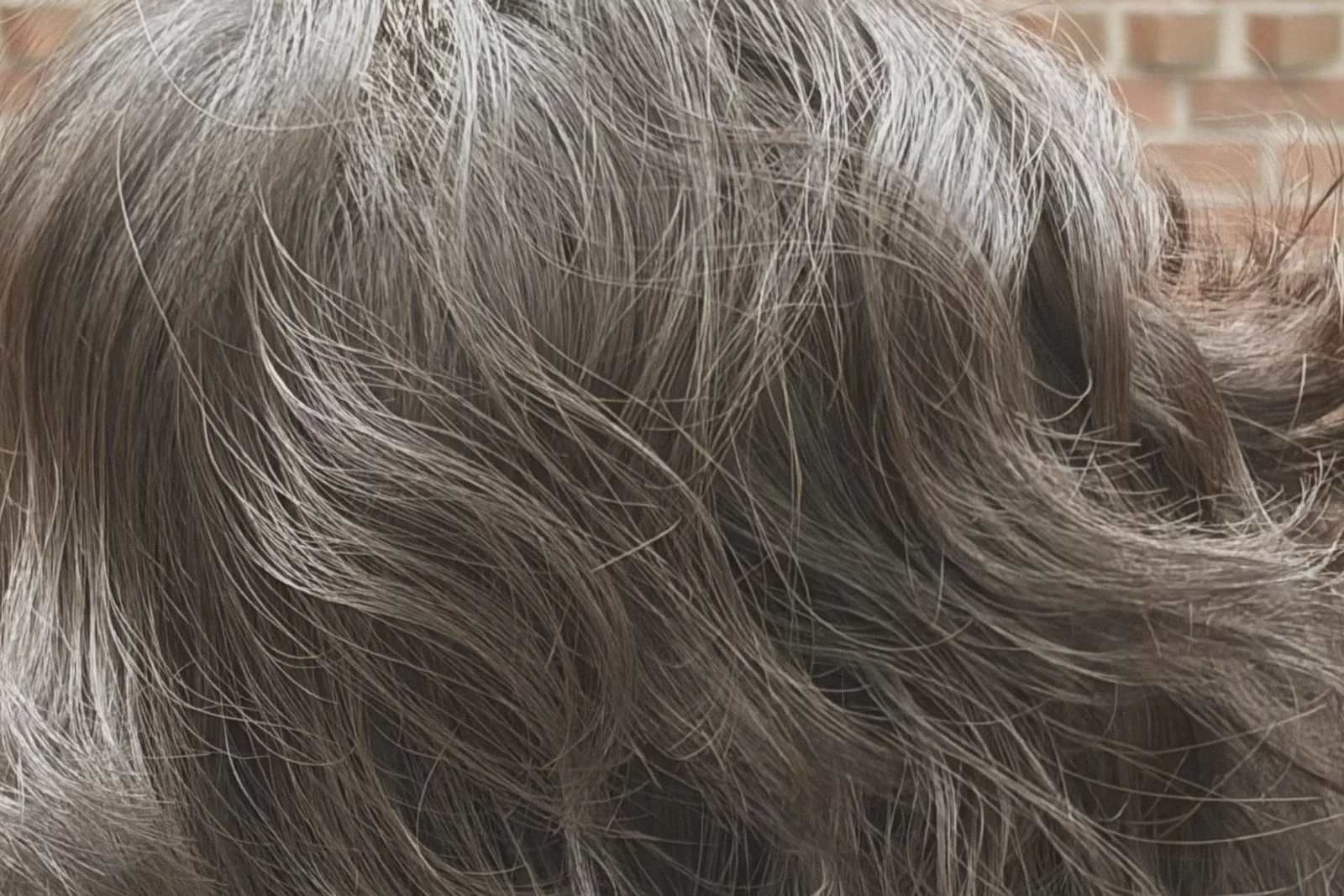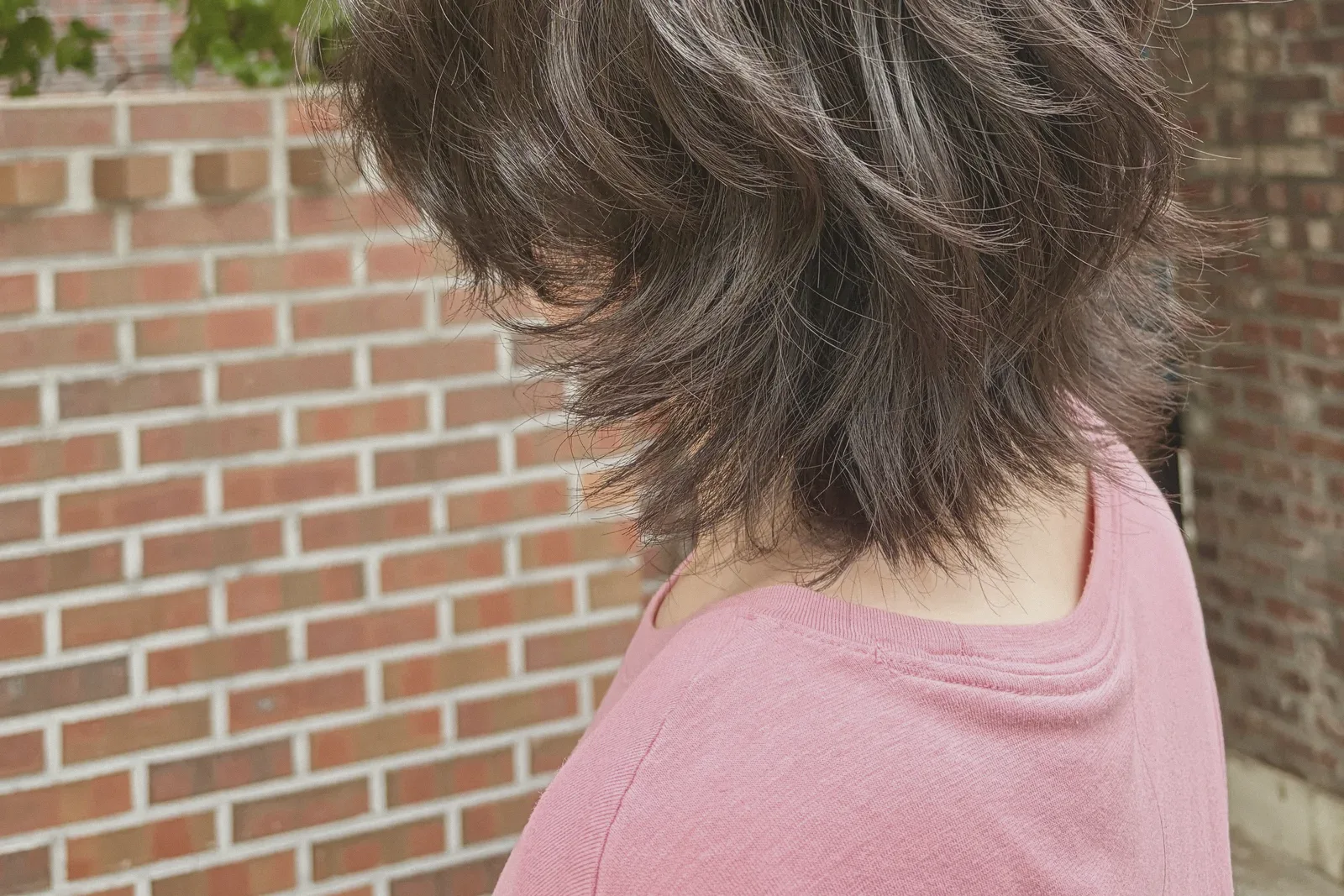
To get rid of static hair in winter, condition every wash, keep a leave-in conditioner or a little hair oil for the ends, and dry gently. Hair carries a negative charge that rubbing against combs, hats and hands builds up. Conditioners deposit positively charged ingredients that cancel it, and lower-pH shampoos add less charge.
You pull off a wool hat in a heated hallway and half your hair lifts toward it, the rest clinging to your cheek. If you are searching for how to get rid of static hair in winter, the useful part is the why: the hair is carrying an electrical charge, and every fix that works either cancels that charge or cuts down the rubbing that builds it.
How do you get rid of static hair in winter?
Condition every time you wash, add a leave-in conditioner or a few drops of oil to the lengths, and cut down the friction that builds charge in the first place. Those three habits cover most of it.
In practice, for a winter week:
- In the shower: shampoo the scalp, then use conditioner on the lengths and ends every time, not only when hair feels dry.
- After washing: press water out with a towel rather than rubbing, and smooth a leave-in conditioner or a small amount of oil over the ends while hair is still damp.
- Before a hat or scarf: touch up the outer layer with a pea-sized amount of leave-in or oil, warmed between your palms.
- During the day: if the lengths fly up, press a tiny amount of product over them with flat hands instead of brushing.
The sections below explain why each step works, so you can drop the ones your hair does not need.
Why does hair get static in winter?
Because hair picks up a charge when it rubs against something made of a different material, and winter gives it more to rub against. In a 2007 lab study at Ohio State University, the researchers note that contact between hair and “dissimilar materials, such as plastic combs, hands, and latex balloons, creates a charge on hair.”
Winter adds hats, scarves, high collars and wool coats to that list, and you touch your hair more when you take them off. The air changes too. A 2023 Korean study describes winter as a season of low relative humidity and notes that indoor heating devices add to moisture loss; most static-hair advice we read blames that dry air as well.
Hair is not neutral to begin with. A 2015 dermatology review describes the hair fiber as normally carrying a negative charge, and a separate review of hair cosmetics explains that rough washing, drying without protection, friction, sunlight and alkaline chemical treatments change the hair surface to a more water-attracting, negatively charged one. Each strand with the same charge pushes away from the others, which is the halo you see.
Does conditioner help with static hair?
Yes, and reducing static is one of the jobs it was designed for. The 2015 dermatology review lists improving manageability, decreasing static electricity and adding luster as the purpose of hair conditioners.
The mechanism is simple attraction. In the review’s words, “Conditioner molecules contain cationic surfactant which gives a positive electric charge to the conditioner.” Hair’s negative charge pulls those positive molecules onto the strand, especially where it is most weathered, and the review concludes: “Thus, conditioners reduce the static electricity.” Damaged hair is even more negatively charged, according to the same paper, which is why bleached, colored or heat-styled ends tend to fly away first.
Conditioner also smooths the surface. A 2025 review of hair friction from Imperial College London and Procter & Gamble explains that weathered hair loses its natural fatty outer layer and becomes higher-friction, and that conditioners deposit ingredients that can bring friction back to levels similar to undamaged hair. Lower friction means less charge built by rubbing.
If you have been skipping conditioner because your hair is fine or oily, try it on the lower half only. You keep the roots light and still give the lengths the part they need.
Can shampoo make hair static worse?
It can, depending on its pH and how you follow it. A 2014 Brazilian review concluded that an alkaline pH may increase the negative electrical charge of the hair fiber surface and, with it, friction between fibers.
The authors measured 123 shampoos from international brands. Their pH ranged from 3.5 to 9.0, and only 38.21% were at pH 5.5 or below. Among the 15 professional salon shampoos in the sample, 75% were at 5.5 or below. The authors’ conclusion is direct: “lower pH of shampoos may cause less frizzing for generating less negative static electricity on the fiber surface.” For reference, the 2015 review gives the pH of the hair fiber as 3.67 and of the scalp as 5.5.
Most shampoo labels do not state pH, which the 2014 authors point out. The practical answer is the conditioner step: they also explain that cationic, amphoteric and nonionic ingredients are added to some shampoos precisely to offset the static that cleansing ingredients create. If your hair is static straight out of the shower, a conditioner after every wash usually matters more than hunting for a shampoo’s pH.
Washing less often can also help in the coldest weeks. Our guide to how often you should wash your hair covers how far you can stretch it.
Do hair oils and leave-in products stop static?
They help, through two routes. Leave-in conditioners carry the same charge-neutralizing ingredients as rinse-off ones, and oils lower friction between strands.
A 2026 Brazilian study on hair-protective films notes that conditioner and leave-in formulations contain antistatic agents that neutralize charges generated on the hair by shampoo. For oils, the 2015 hair-cosmetics review reports that mineral and sunflower oils can form a film on the cuticle that adds shine and lowers friction, and that coconut oil can penetrate the hair shaft. The same review names silicones, dimethicone most widely, as the most-used conditioning agent; a well-chosen silicone serum works on static the same way.
Use less than you think. The review warns that thick films of oil can leave hair looking oily and heavy, and recommends oils that leave a thin layer. A few drops warmed between your palms and pressed over the lengths is enough for most hair. Our guide to using hair oil before or after washing explains which timing suits which job.
Editor’s note
I put argan oil on wet hair after washing, tipping my head back or forward so it stays on the lengths and off my scalp. I don’t use a heat dryer: I towel-dry, then let a fan finish the job. My hair is permed, and with this routine the curl holds and I get no static. The oil I used before cared for my hair well, but its scent was strong and it left my hair feeling heavy; the one I use now has almost no scent and does not feel sticky.
Does your brush or towel affect static?
They can, because both are friction. The 2007 Ohio State study lists plastic combs among the materials that charge hair on contact, and the 2025 friction review counts brushing and combing among the processes that wear away hair’s protective outer layer.
Detangle gently while conditioner is still in your hair, when strands slide more easily, then leave it alone. Press water out with a towel instead of rubbing it. Go easy on hot tools as well: the friction review lists straightening and curling among the processes that speed up the loss of that outer layer. If you are finding short snapped pieces rather than flyaways, see hair breakage in winter.
How should you adjust your routine for hats and scarves?
Prepare before you put them on, and handle your hair less when you take them off. A small amount of leave-in or oil on the outer layer before you go out leaves less bare, charged surface for wool or synthetic fabric to rub.
When you take a hat off, press your hair flat with your palms rather than combing it straight away. If your scalp also feels tight and itchy once the heating comes on, that is a separate issue; our guide to why your scalp itches in winter covers it. If only your ends stay flyaway whatever you do, remember the 2015 review’s point that damaged hair carries a stronger negative charge: those lengths need the most conditioner.
This article is for general cosmetic information and is not medical advice. If your hair is breaking, thinning or your scalp is sore, speak with a dermatologist.
Evidence: The charge mechanism comes from hair-science reviews and lab studies on hair fibers; the shampoo pH figures come from one survey of 123 products. The routine here is our synthesis of that evidence, not a tested protocol.
- RAIP: R3 Argan Hair Oil
How do you get rid of hair static fast?
Smooth a small amount of leave-in conditioner or hair oil between your palms and press it over the flyaway lengths. Conditioning ingredients carry a positive charge that neutralizes the negative charge on hair, and oils lower friction between strands.
Why is my hair so staticky in winter?
Rubbing hair against a different material, such as a plastic comb, a hat or your hands, creates a charge on it, according to lab work on hair fibers. Winter adds more of that rubbing, and heated indoor air is drier.
Does conditioner help with static hair?
Yes. A dermatology review explains that conditioner's positively charged ingredients are attracted to hair's negative charge and deposit on it, and states that conditioners reduce static electricity. Damaged hair carries an even stronger negative charge, so the ends usually need it most.
Can shampoo make hair static worse?
It can. A review of shampoo pH says an alkaline pH may increase the negative charge on the hair surface. In a survey of 123 shampoos, pH ranged from 3.5 to 9.0, and only 38.21% were at 5.5 or below. Following with conditioner offsets much of this.
- D'Souza P, Rathi SK. Shampoo and conditioners: what a dermatologist should know? Indian J Dermatol. 2015;60(3):248-54.
- Gavazzoni Dias MF, et al. The shampoo pH can affect the hair: myth or reality? Int J Trichology. 2014;6(3):95-9.
- Gavazzoni Dias MF. Hair cosmetics: an overview. Int J Trichology. 2015;7(1):2-15.
- Lodge RA, Bhushan B. Effect of physical wear and triboelectric interaction on surface charge as measured by Kelvin probe microscopy. J Colloid Interface Sci. 2007;310(1):321-30.
- Weiand E, et al. Understanding and controlling the friction of human hair. Adv Colloid Interface Sci. 2025;345:103580.
- Zito RA, et al. Tara and red algae biopolymer as a film-forming substance for hair protection. ACS Omega. 2026;11(2):2832-2841.
- Park EH, et al. Effects of winter indoor environment on the skin: unveiling skin condition changes in Korea. Skin Res Technol. 2023;29(6):e13397.
Editorial content, not medical advice.