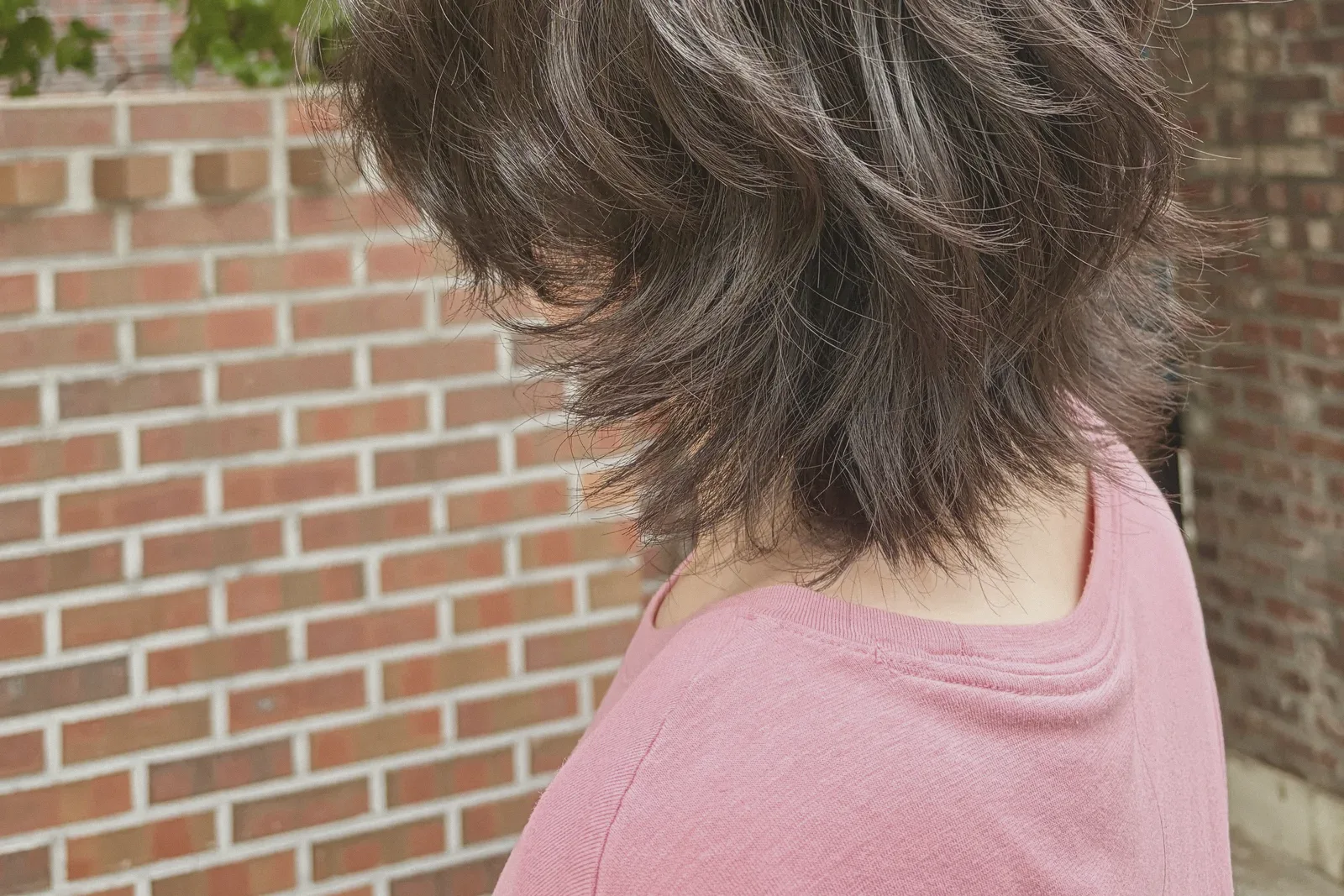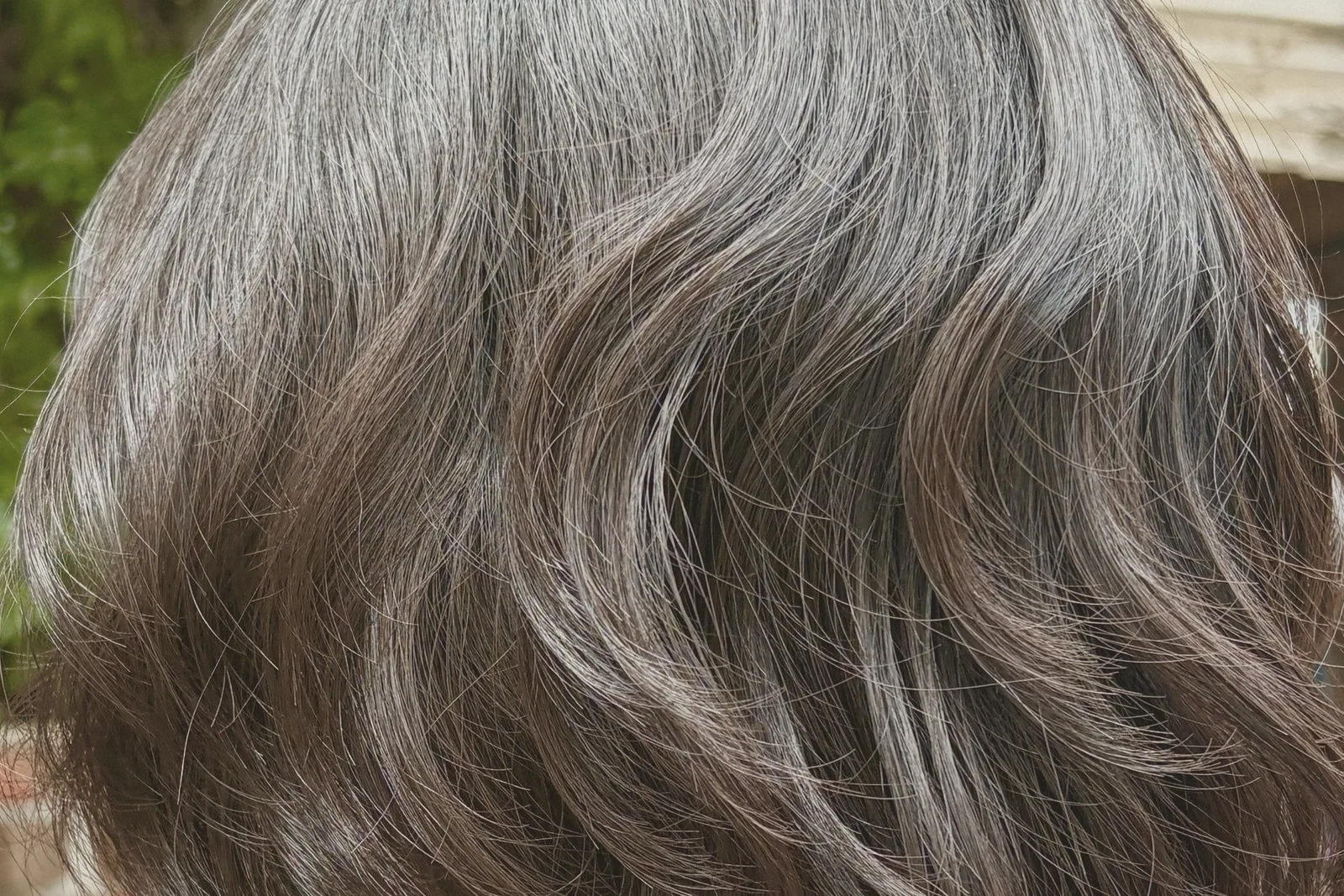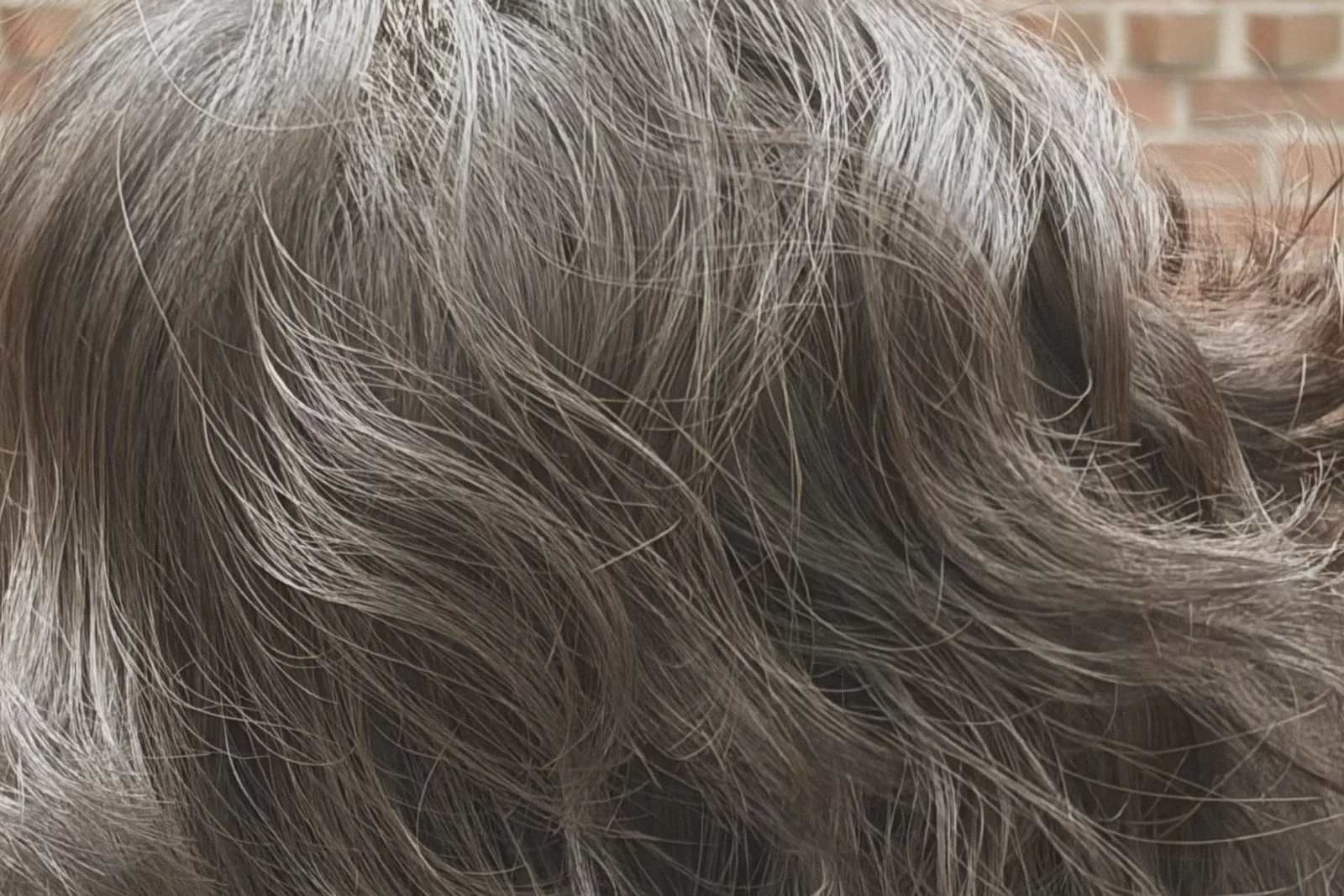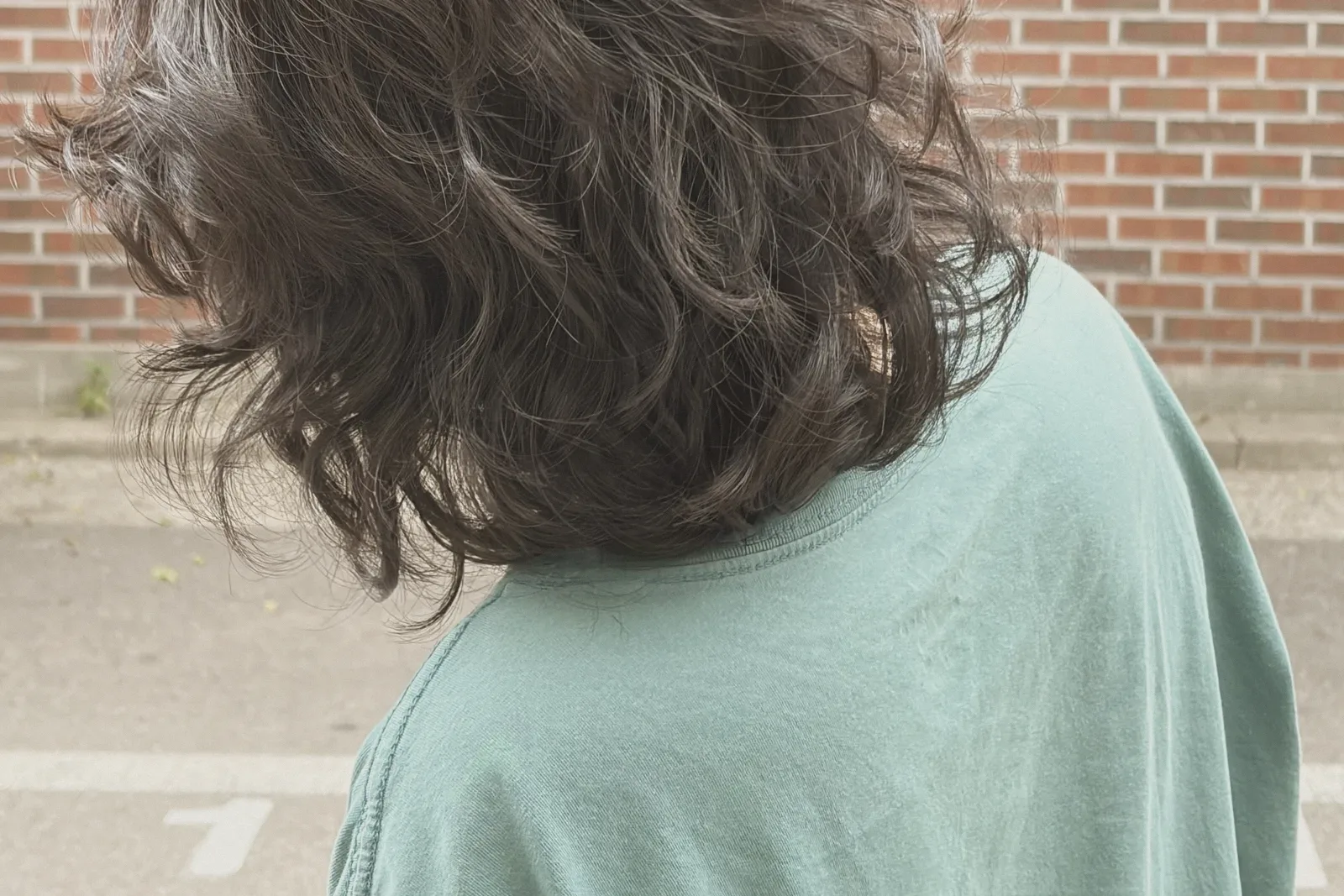
Hair breakage in winter comes mostly from combing, heat styling and friction, and very dry air makes strands snap more easily: in one lab study, 24% of untreated fibers broke early at 20% humidity, far fewer at 80%. Use conditioner every wash, detangle gently, keep heat moderate and trim split ends.
You pull off a wool scarf and a scatter of short hairs comes with it, none of them with the little white bulb at the end. That is hair breakage in winter: the shaft snapping somewhere along its length, not hair falling from the root. It feels like the cold is doing it. The research points somewhere more fixable, to the comb, the dryer, the flat iron and the dry air those steps happen in.
Why does hair break more in winter?
Because winter stacks several stresses that each raise breakage, on hair that has less water in it. We should be clear about the evidence first: we found no study that measured hair breakage across the seasons. What exists are laboratory tests on hair fibers, and they line up with what people notice.
Hair’s strength depends on its water content. A materials study from the University of California, San Diego, found that hair’s tensile strength is “significantly dependent on strain rate and humidity.” The clearest test of dry air comes from a 2021 study of textured hair fibers stretched until they broke, 50 fibers per group: “At 20% RH, 24% of virgin hair and 30% of relaxed control hair broke prematurely. At 80% RH, the premature breakage in all of the tested hair types was significantly reduced.” RH is relative humidity, and 20% is very dry; a Finnish survey of 20 hair salons measured indoor humidity of 18% to 42% in winter. Hair that is already chemically straightened broke early more often in both conditions.
So dry air makes each comb stroke and each tug a little more likely to snap a strand. It does not break hair on its own.
Is it breakage or shedding?
Look at the ends of the hairs you find. A hair shed from the root is long and usually has a small pale bulb. A broken hair is shorter, with a blunt or frayed end and no bulb. A 2015 review of hair cosmetics notes “it is important to distinguish hair shed due to telogen effluvium from hair shed due to hair shaft breakage,” the first being a pause in the growth cycle and the second damage to the strand.
The two also run on different calendars. A study of 823 women in Zurich who came to a clinic about hair loss found “a maximal proportion of telogen hairs in summer,” with rates lowest in late winter. If you are losing long, full-length hairs from the root in large amounts, that is a question for a dermatologist, not a conditioner.
Does combing cause most hair breakage?
Yes, in the lab, combing and brushing are where most strands snap. Researchers at the Textile Research Institute in Princeton concluded that breakage during grooming “results from tangling, looping, knotting, and impact loading,” the moment a comb meets a knot at speed. Wet and dry hair break differently: “Combing dry hair is more related to short segment breaks, and wet combing is related to long segment breaks,” as the 2015 review puts it. Short pieces come from worn ends; longer pieces come from wet hair, which stretches and gives way more easily.
In the same institute’s tress studies, bleaching raised both kinds of breakage, and “a commercial hair conditioner decreased both types of breakage.” That is the single most useful finding for winter: conditioner lowers friction, so the comb glides past instead of snagging. Static is the other winter grooming problem, which we cover in how to get rid of static hair in winter.
Does blow-drying damage hair more in winter?
It depends on distance and heat more than on the dryer itself. In a study of hair tresses dried 30 times under different conditions, hotter, closer drying damaged the surface more. The authors’ conclusion is more surprising: “Although using a hair dryer causes more surface damage than natural drying, using a hair dryer at a distance of 15 cm with continuous motion causes less damage than drying hair naturally.” Hair left wet for a long time showed damage deeper in the strand that the moderate dryer did not.
Flat irons are a bigger risk. Industry researchers note that they “operate at temperatures over 200 °C” and found that “Thermally stressing hair led to significantly increased hair breakage when subjected to combing.” If you straighten more in winter because humidity no longer frizzes it out, that habit may matter more than the weather. What a spray can and cannot do against that heat is in our look at whether heat protectant works.
Do hair masks and oils stop breakage?
They help by lowering friction and protecting the surface, not by repairing a broken strand. The 2015 review calls silicone “The most active and used conditioner agent,” and our dimethicone entry explains what that film does and doesn’t do. The same review reports that oil treatments reduced split-end formation and lowered combing forces. We found no trial testing a rinse-off mask against breakage, so a weekly mask is best treated as a richer conditioner for the ends, not a fix.
Oils also differ. When to put them on, before or after washing, changes what they do, as we explain in hair oil before or after washing.
How do you stop hair breaking in winter?
Work on the steps where hair snaps, in this order of impact.
- Condition every wash, from mid-lengths to ends, where hair is oldest and most worn.
- Detangle before you comb. Work from the ends up with a wide-tooth comb or your fingers, on damp hair with conditioner or oil on it, never by dragging a brush from the root.
- Keep heat moderate. Hold a dryer about 15 cm away and keep it moving, the setting that did least overall damage in the tress study. Save the flat iron for occasions.
- Smooth the ends with a few drops of oil or a leave-in on clean, damp hair, away from the scalp.
- Trim split ends. No product rejoins them, and a split can travel up the strand.
If your scalp also feels tight in heated rooms, washing frequency matters too; see how often should you wash your hair.
Editor’s note
I wash my hair every evening. I soak it well in warm water before shampooing, blot it with a towel, and dry it in front of a fan rather than with a hot dryer. While it is still wet, I put a hair oil on the lengths only, tipping my head back or forward so it doesn’t touch my scalp. The one I use now, from RAIP, lists silicones before argan oil. My hair is permed, and with this routine the curl holds and I don’t get static. An oil I used before left my hair feeling heavy and smelled strongly artificial, so texture and scent are worth testing before you commit to a bottle.
Evidence: The evidence comes from laboratory tests on hair fibers and tresses, not from studies of people's hair across seasons; no study we found measured breakage in winter directly, so the winter link is an inference from humidity, heat and combing data.
- RAIP: R3 Argan Hair Oil
Why does my hair break more in winter?
No study has measured breakage across seasons, but lab tests show hair fibers break early more often in very dry air, and winter brings more drying, heat styling and friction from collars and hats. Combing tangles is the step where most breaks happen.
Is winter hair breakage the same as hair shedding?
No. Breakage is the shaft snapping, leaving short pieces with no bulb. Shedding is whole hairs falling from the root. A Swiss study of 823 women found shedding was highest in summer and lowest in late winter.
Is it better to blow-dry or air-dry hair in winter?
In a lab study of hair tresses, a dryer held 15 cm away and kept moving caused less overall damage than drying naturally, though more surface damage. Hotter, closer drying damaged the surface more.
Do hair masks fix split ends?
No product rejoins a split end. Conditioners and oils make hair easier to comb, which lowers new breakage, and oil treatments have reduced split-end formation in studies, but an existing split end has to be trimmed.
- Malinauskyte E, et al. Penetration of different molecular weight hydrolysed keratins into hair fibres and their effects on the physical properties of textured hair. Int J Cosmet Sci. 2021;43(1):26-37.
- Yu Y, Yang W, Wang B, Meyers MA. Structure and mechanical behavior of human hair. Mater Sci Eng C. 2017;73:152-163.
- Robbins C, Kamath Y. Hair breakage during combing. III. The effects of bleaching and conditioning on short and long segment breakage by wet and dry combing of tresses. J Cosmet Sci. 2007;58(4):477-84.
- Kamath YK, Robbins C. Hair breakage by combing and brushing: a comment on Evans and Park, a statistical analysis of hair breakage II. J Cosmet Sci. 2011;62(6):579-85.
- Lee Y, et al. Hair shaft damage from heat and drying time of hair dryer. Ann Dermatol. 2011;23(4):455-62.
- Zhou Y, et al. The effect of various cosmetic pretreatments on protecting hair from thermal damage by hot flat ironing. J Cosmet Sci. 2011;62(2):265-82.
- Gavazzoni Dias MF. Hair cosmetics: an overview. Int J Trichology. 2015;7(1):2-15.
- Kunz M, Seifert B, Trueb RM. Seasonality of hair shedding in healthy women complaining of hair loss. Dermatology. 2009;219(2):105-10.
- Leino T, et al. Working conditions and health in hairdressing salons. Appl Occup Environ Hyg. 1999;14(1):26-33.
Editorial content, not medical advice.