Does heat protectant work? In lab tests on hair, partly: heat-protection sprays reduced protein damage from straightening irons, and selected polymers significantly cut breakage when flat-ironed hair was combed. They reduce damage rather than prevent it. Use the lowest temperature that holds your style, and press only hair that is fully dry.
You mist the spray on, run the flat iron through, and a week later the ends still feel rough and snap in the brush. So does heat protectant work, or is it a ritual that smells nice? The lab answer is that it helps, measurably, but less than two things you control directly: how hot the plates are, and how dry your hair is when they close.
Does heat protectant work?
Yes, partly, in laboratory tests on hair. Two studies give the clearest picture.
At the University of Manchester, researchers pressed hair samples with straightening irons after spraying them with either a water-based or an ethanol-based heat-protection spray. They tracked tryptophan, a building block of hair protein that heat breaks down, as a marker of chemical damage. In their words, “tryptophan damage was reduced by repeated applications of both the ‘wet’ and ‘dry’ heat-protection sprays.” Reduced, not stopped.
In New Jersey, scientists at International Specialty Products, a company that makes hair-care polymers, flat-ironed hair tresses with and without polymer pretreatments, then combed them. Heat alone had a clear effect: “Thermally stressing hair led to significantly increased hair breakage when subjected to combing.” With selected polymers applied first, breakage went down significantly, and the authors concluded that “polymeric pretreatments provide thermal protection against thermal degradation of keratin in the cortex as well as hair surface damage.” The cortex is the inner bulk of the strand; the surface is the cuticle, the overlapping outer layer that makes hair look smooth or rough.
Two limits are worth knowing before you buy anything. The abstract gives no percentage for how much breakage fell, and the company tested ingredients it supplies. And all of this was done on tresses in a lab, not on people styling their own hair, so it tells you what a coating can do under controlled heat rather than how a particular bottle performs on your head.
What does a flat iron actually do to hair?
It heats the strand hot enough to change and break down its protein. The ISP team notes that flat irons “operate at temperatures over 200 °C,” which is 392°F. At that heat, their measurements showed the coiled protein structure that gives hair its spring converting into a flatter, sheet-like form, with keratin degrading. Heat-stressed hair also took back less water afterward, which may be part of why over-ironed ends feel dry.
A thermal analysis from the University of São Paulo, which tested Caucasian and Asian hair, puts numbers on the steps. Water left the hair between 25°C and 170°C, gases including carbon dioxide and hydrogen sulfide were released from 200°C, and the keratin denatured at 237°C (about 459°F). Under the microscope, flat-ironed hair showed cuticle damage. The authors’ takeaway is plain: “The results evidenced the importance of the control of temperature in the procedures involving heat.”
The damage also builds up. In a 2025 study by AgResearch in New Zealand and Unilever R&D in the UK, hair went through accelerated heat treatments meant to mimic roughly 1 year of heated styling. Heat broke some of the sulfur bridges that hold keratin chains together, at points the authors describe as crucial to the protein’s structure. That is the slow side of heat damage: the study simulated a year of styling, not a single session.
How hot is too hot for straightening?
There is no single safe number, but lower is better: damage rises steeply with temperature while the style itself improves little. At the Textile Research Institute in Princeton, researchers used a curling iron that was hotter at one end than the other to compare many temperatures at once. They found a “surprisingly limited role of elevated temperature” in how well hair held its new shape, while “The onset of damage, however, is strongly temperature dependent.”
Put simply, turning the dial up mostly buys you more damage, not a longer-lasting style. That study used a curling iron rather than a flat iron, but the principle is the same: start at the low end, and raise the heat only if your hair will not hold the shape.
Irons themselves also differ. A 2025 paper from Good Hair Day in Cambridge, UK, proposed a 6-point heat damage scale built from 8 tensile measurements of single wet hair fibers, and applied it to a range of straighteners on the market. Its authors note that “the industry does not yet have a standardized method of heat damage measurement,” so there is currently no common rating to compare tools by.
Should you use heat protectant on wet or dry hair before straightening?
Apply it to damp or dry hair if you like, but let your hair dry completely before the iron goes on. Wet hair under a hot plate takes more structural damage, and this is the most consistent finding across the studies.
The Manchester team found that a flat iron on wet hair causes “the same chemical damage, but considerably more structural damage,” and that the water-based spray led to more structural harm than the ethanol-based one. Light microscopy showed it, and so did tensile tests, which measure how a fiber stretches and breaks. They put it down to water boiling off the hair too fast. Their conclusion: “the effectiveness of commercial heat-protection sprays can be improved by the removal of water and by the use of volatile ingredients, such as ethanol, as base solvents.”
Earlier work at the same Princeton institute saw what that looks like. Curling-iron treatment of dry hair, at 50% relative humidity, produced cracking and fused cuticle edges. The same treatment on wet hair added “bubbling and buckling of the cuticle due to the formation and escaping of steam from the fiber.”
In people, this has a name. Bubble hair is a change in the hair shaft where air-filled cavities form, usually from heat. A University of Miami review of 11 case reports and series found that “The majority of patients were middle-aged Caucasian women who had used a heated tool to dry or style wet hair.” In those reports, the treatment was to stop using heated tools.
If your hair sizzles or steams when the iron closes, it is not dry yet. If you use a water-based spray, give it time to dry before ironing. The Manchester study did not test drying time directly, but the reasoning follows from its result.
What heat protectant ingredients have been tested?
The ingredients with published flat-iron data are mostly polymers. The ISP study named three pretreatments that significantly reduced breakage after flat ironing: VP/acrylates/lauryl methacrylate copolymer, polyquaternium-55, and a combination of PVM/MA copolymer with polyquaternium-28. On tresses, they protected the protein inside the strand and kept the cuticle smoother, which the authors linked to the drop in breakage.
The base matters as well. Ethanol evaporates quickly, and the Manchester team found an ethanol-based spray did less structural damage than a water-based one under a straightening iron.
Conditioners played a role in the Princeton curling-iron study too. Fibers treated with conditioners lasted longer under repeated heat, especially those treated with low-molecular-weight conditioners such as one the researchers call CETAB, which they showed could get inside the fiber. That is one more reason to condition every wash if you heat-style; our guide to hair breakage in winter explains how conditioner also lowers the combing breakage that heat makes worse.
What we cannot tell you is how any finished product performs, or what the temperature figures printed on bottles are based on. Those numbers come from brands, and we have not seen the tests behind them.
How do you use heat protectant before straightening?
Treat the spray as the last of several precautions, not the only one.
- Dry first. Towel-blot, then dry your hair fully, whether with a dryer or air. A wet strand under a 200°C plate is where the worst structural damage showed up in the lab.
- Apply the protectant evenly to sections, mid-lengths to ends, where hair is oldest. If it is water-based, let it dry before ironing.
- Start the iron low and raise it only if the style will not hold.
- Comb gently afterward. Heat-stressed hair broke more under combing in the ISP study, so detangle with a wide-tooth comb or your fingers.
If you use a hair dryer before the iron, our winter breakage guide covers how dryer distance changed damage in a tress study. And if you finish with oil, when you apply it changes what it does, as we explain in hair oil before or after washing. If your heat-styled ends also fly away in dry indoor air, see how to get rid of static hair in winter.
Editor’s note
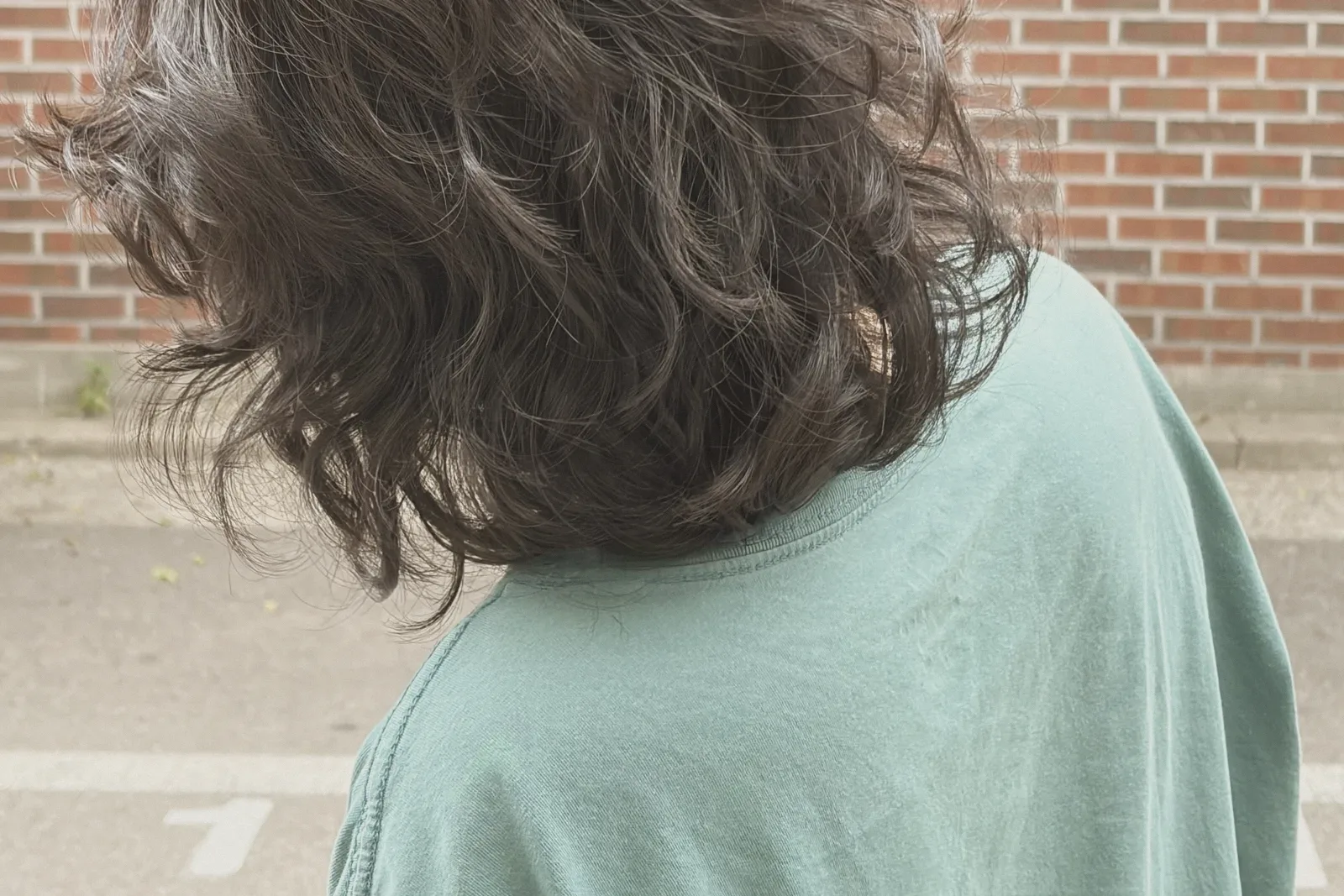
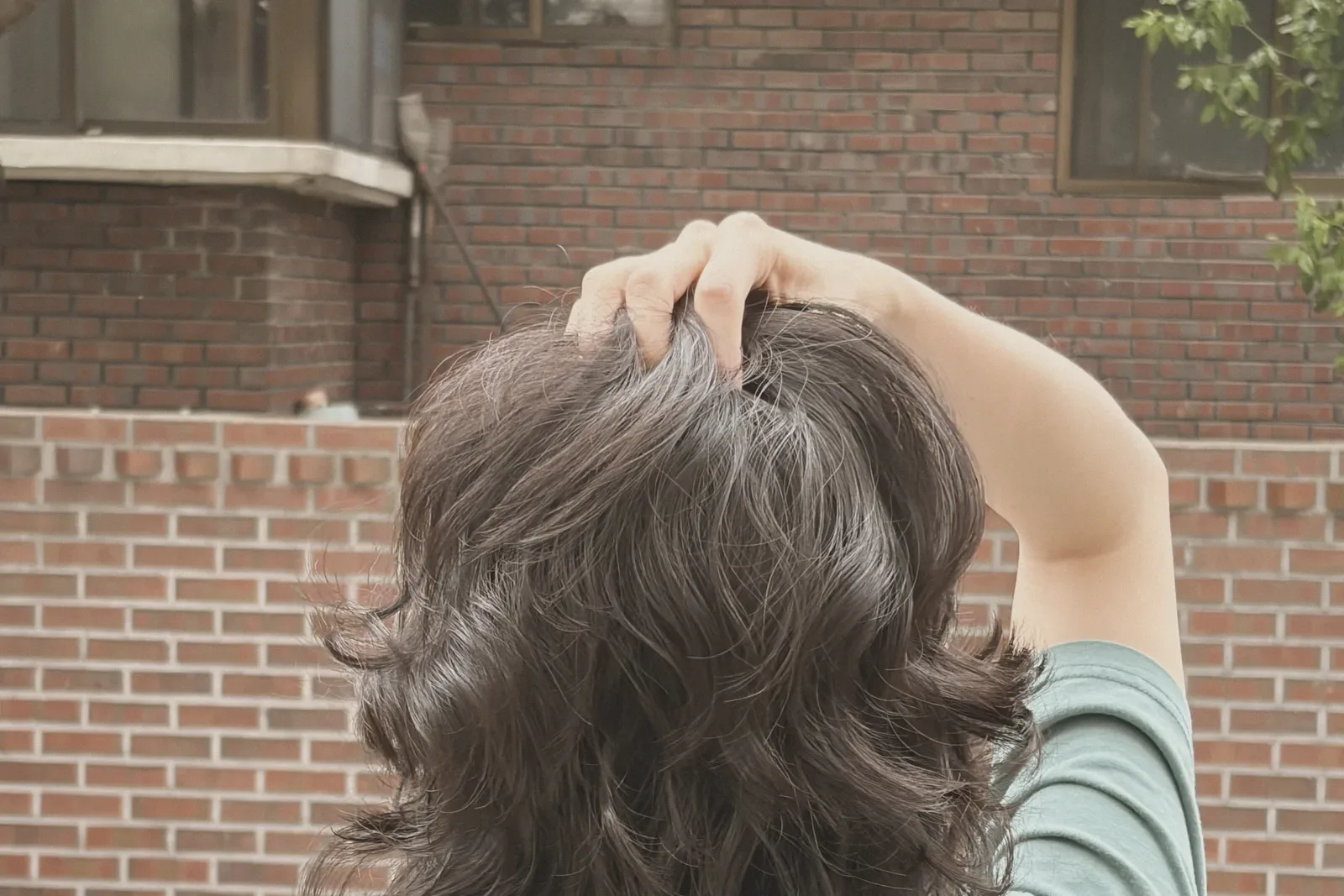
I wash my hair every evening, blot it with a towel, and dry it in front of a fan rather than with a hot dryer. My hair is permed, and with this routine the curl holds. I keep coming back to that when I read these studies: the most reliable way to lower heat damage is to use less heat, and a spray only adds a margin of protection for the days you need the iron.
This article is for general cosmetic information and is not medical advice. If you notice sudden changes in your hair shaft or scalp that do not settle, see a dermatologist.
Evidence: The evidence comes from laboratory tests on hair tresses and single fibers, mostly run by ingredient suppliers and industry research institutes; none of it measures a named product on people's own hair over time.
Does heat protectant actually work?
In lab tests, partly. A University of Manchester study found that repeated use of heat-protection sprays reduced protein damage from straightening irons, and an industry study found selected polymers significantly reduced breakage in flat-ironed hair. Neither showed damage stopped completely.
Should you use heat protectant on wet or dry hair?
Apply it to damp or dry hair, but make sure hair is fully dry before a flat iron touches it. In lab tests, irons on wet hair caused more structural damage, and a water-based spray did more structural harm than an ethanol-based one.
What temperature damages hair?
Studies point to the 200°C range. Flat irons operate at over 200°C (392°F), and in one thermal analysis, gases were released from hair from 200°C and keratin denatured at 237°C. A US study found the onset of damage strongly depends on temperature.
What ingredients should a heat protectant have?
The polymers with published lab data are VP/acrylates/lauryl methacrylate copolymer, polyquaternium-55, and PVM/MA copolymer with polyquaternium-28, all of which reduced breakage after flat ironing. A study also found an ethanol base worked better than water under an iron.
- Zhou Y, et al. The effect of various cosmetic pretreatments on protecting hair from thermal damage by hot flat ironing. J Cosmet Sci. 2011;62(2):265-82.
- Christian P, Winsey N, Whatmough M, Cornwell PA. The effects of water on heat-styling damage. J Cosmet Sci. 2011;62(1):15-27.
- Ruetsch SB, Kamath YK. Effects of thermal treatments with a curling iron on hair fiber. J Cosmet Sci. 2004;55(1):13-27.
- Harper D, Qi JC, Kaplan P. Thermal styling: efficacy, convenience, damage tradeoffs. J Cosmet Sci. 2011;62(2):139-47.
- Lima CRRC, et al. Heat-damaged evaluation of virgin hair. J Cosmet Dermatol. 2019;18(6):1885-1892.
- Shaw N, et al. Application of single hair fibre tensile measurements to create an industry-standard heat damage scale for hair. Int J Cosmet Sci. 2025;47(6):1085-1103.
- Plowman JE, et al. Key locations of oxidative damage in human hair keratins after heat and ultraviolet light exposure. Int J Cosmet Sci. 2025;47(6):1104-1114.
- Li YM, et al. A review of bubble hair deformity. Int J Dermatol. 2023;62(3):428-431.
Editorial content, not medical advice.