Closed comedones are small, skin-colored bumps that form when dead skin cells and oil get trapped under a pore opening that has closed over. They are the bumps most people call whiteheads, and they often show only under side light or foundation. Retinoids and salicylic acid have the clearest evidence for softening them over time.
I found mine the way most people find theirs: not in a mirror, but under a thumb. Running a finger along my jaw one evening, I felt a faint, gritty texture that the mirror had never shown me. It took a ring light and a lot of squinting to see what my skin already knew was there.
That texture has a name, and it isn’t as alarming as it sounds.
What Are Closed Comedones, Exactly?
A closed comedo forms when dead skin cells and sebum build up inside a hair follicle that has a narrow opening at the surface, so the trapped material never breaks through. That’s the key difference from an open comedo, or blackhead, where the pore stays open and the trapped material oxidizes into a visible dark plug. In a closed comedo, the surface stays sealed, so what you get is a small, flesh-colored or slightly raised bump rather than a spot with a dark or white center.
Dermatology literature describes the underlying process as follicular hyperkeratinization: skin cells inside the follicle stop shedding normally and become too cohesive, so they pile up instead of moving to the surface on schedule. Researchers have found that this buildup can start forming as a microcomedone weeks before anything is visible on the skin, which is part of why closed comedones can feel like they appear out of nowhere.
They tend to cluster along the jaw, chin, and forehead, and they’re often more obvious under makeup, in raking side light, or on camera than they are in a normal bathroom mirror. If you’ve ever wondered why your skin looks smooth to you but “textured” in photos, this is frequently the reason.
What Causes Closed Comedones to Form?
Four things typically interact: how much oil your skin produces, how your follicle cells are shedding, the width of the follicle opening itself, and, in some cases, bacterial activity inside the follicle. Genetics play a real role in how narrow or wide your pore openings are, which is why two people with similar oil levels can have very different amounts of visible texture.
Comedogenic ingredients in heavy moisturizers or sunscreens can make things worse for some skin types, but not everyone reacts the same way to the same formula. Hormonal shifts, especially around the menstrual cycle, can also temporarily increase oil production and worsen the texture in the days before a period.
Sun damage and irritation from over-exfoliating can also thicken the outer layer of skin, which narrows the follicle opening further. This is one reason gentle, consistent care tends to outperform aggressive scrubbing.
Which Ingredients Actually Help Closed Comedones?
Two ingredient categories have the clearest evidence: retinoids and salicylic acid, and they work through different mechanisms.
Retinoids normalize how skin cells shed inside the follicle, correcting the hyperkeratinization at the root of the problem rather than dissolving what’s already trapped. Over consistent use, this shows up as fewer new bumps forming and existing ones gradually flattening, though it’s a matter of weeks to months rather than days.
Salicylic acid works differently: it’s lipid-soluble, so it can penetrate into the oily environment of the follicle and loosen the “glue” between dead skin cells, encouraging the buildup to clear. It’s also mildly comedolytic and can reduce follicular blockage over repeated use. If yours comes in a pad, the pad has its own rules for order and frequency, which we cover in how to use toner pads.
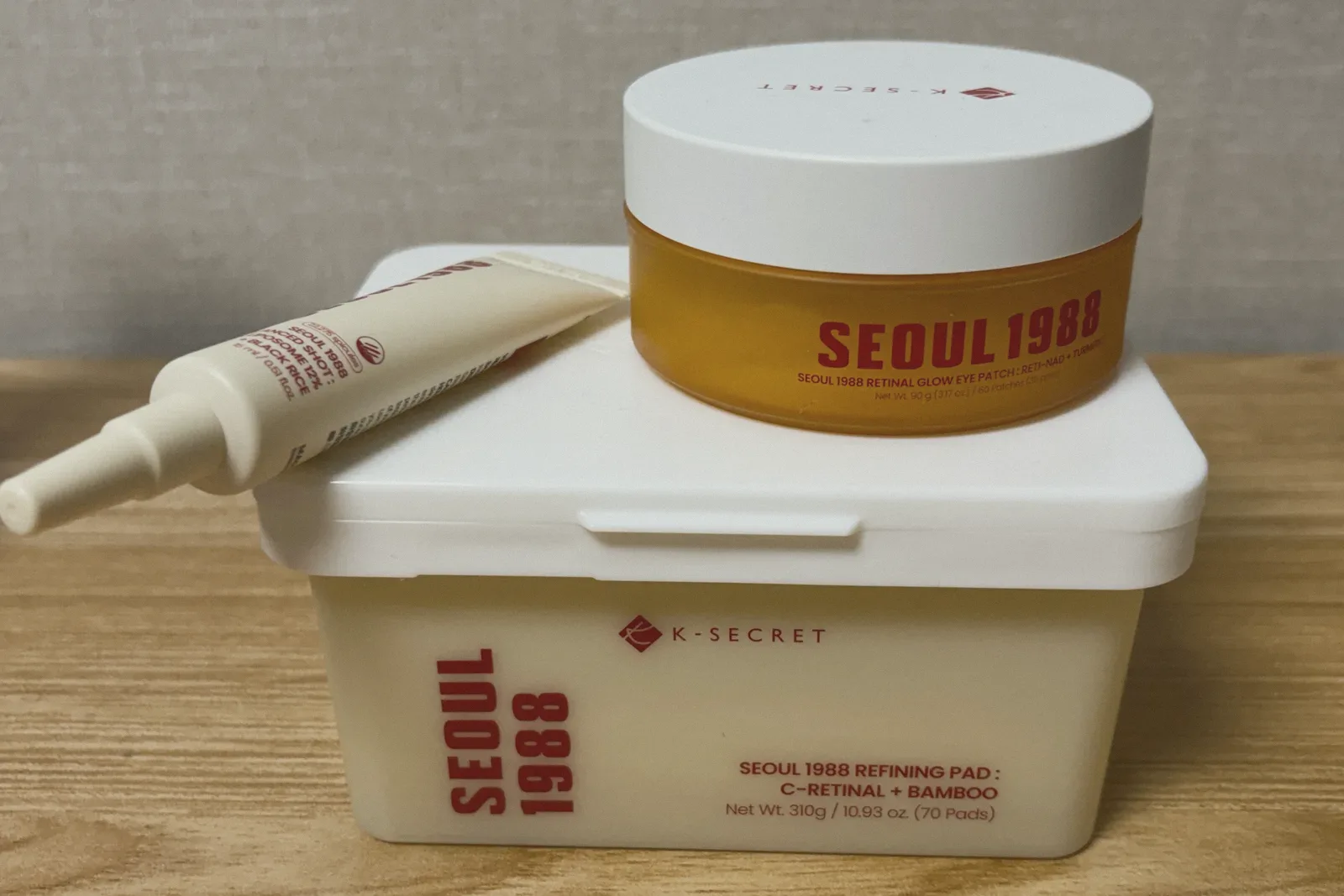
Retinal, sometimes called retinaldehyde, is one step closer to active retinoic acid in the skin’s conversion pathway than retinol is, and formulas built around it are increasingly common in gentler pad and patch formats. I use a retinal pad on my forehead and under my jaw a few nights a week, in place of the retinoids I don’t tolerate daily.
A brightening step matters here too, mostly because closed comedones that get picked at or irritated can leave marks behind. A serum with tranexamic acid or niacinamide won’t clear the bump itself, but it can help even out what’s left once it does. Where each of these steps sits in a full routine is covered in Korean skincare routine order.
Do Closed Comedones Ever Need a Dermatologist?
If a bump is inflamed, painful, or growing, or if over-the-counter comedolytics haven’t moved the needle after a few months of consistent use, it’s worth an in-person opinion. A dermatologist can also tell the difference between a comedo and other bumps that look similar, like milia or fibrous papules, which need a different approach entirely.
Editor’s Note
I’ve been dealing with this exact texture under my chin since high school, and what finally shifted it for me wasn’t a single product, it was two months of falling asleep with retinal patches and pads on. I go into the full timeline, including what didn’t work first, in this week’s Journal.
Evidence: Backed by peer-reviewed dermatology literature on follicular hyperkeratinization and topical comedolytics; product notes reflect the author's own use.
- K-SECRET: SEOUL 1988 Refining Pad: C-Retinal + BambooDisclosure: editor-affiliated brand.
- haruharu wonder: Centella 4% TXA Dark Spot Go Away Serum
Are closed comedones the same as milia?
No. Milia are small, hard, keratin-filled cysts with no visible pore opening at all, and they don't respond to exfoliating acids the way closed comedones can. Closed comedones sit inside an existing hair follicle and usually soften with consistent use of a retinoid or salicylic acid, while milia typically need a professional extraction.
Can closed comedones go away on their own?
Some do, especially if they were triggered by a temporary change like a new heavy moisturizer or a hot, humid trip. Others are more stubborn because the follicle itself has a narrow opening, and in that case, consistent use of a comedolytic ingredient tends to work faster than waiting.
Do closed comedones mean I have acne?
They're one of the mildest forms of acne, technically classified as non-inflammatory comedonal acne. They don't need to be red, sore, or widespread to count, and plenty of people who'd never call their skin 'acne-prone' have a scattering of them along the jaw or chin.
- Zaenglein AL, et al. Mechanisms of the comedolytic and anti-inflammatory properties of topical retinoids. J Drugs Dermatol.
- Arif T. Salicylic acid as a peeling agent: a comprehensive review. Clin Cosmet Investig Dermatol.
- Tanghetti EA. The role of inflammation in the pathology of acne. J Clin Aesthet Dermatol.
- American Academy of Dermatology. Acne: Signs and symptoms.
Editorial content, not medical advice.